
Last updated September 20, 2026
Free on-site gate assessment - hinges, posts, and your LiftMaster or Nice gate operator checked before anything is quoted
The assessment is free and the quote is the invoice.
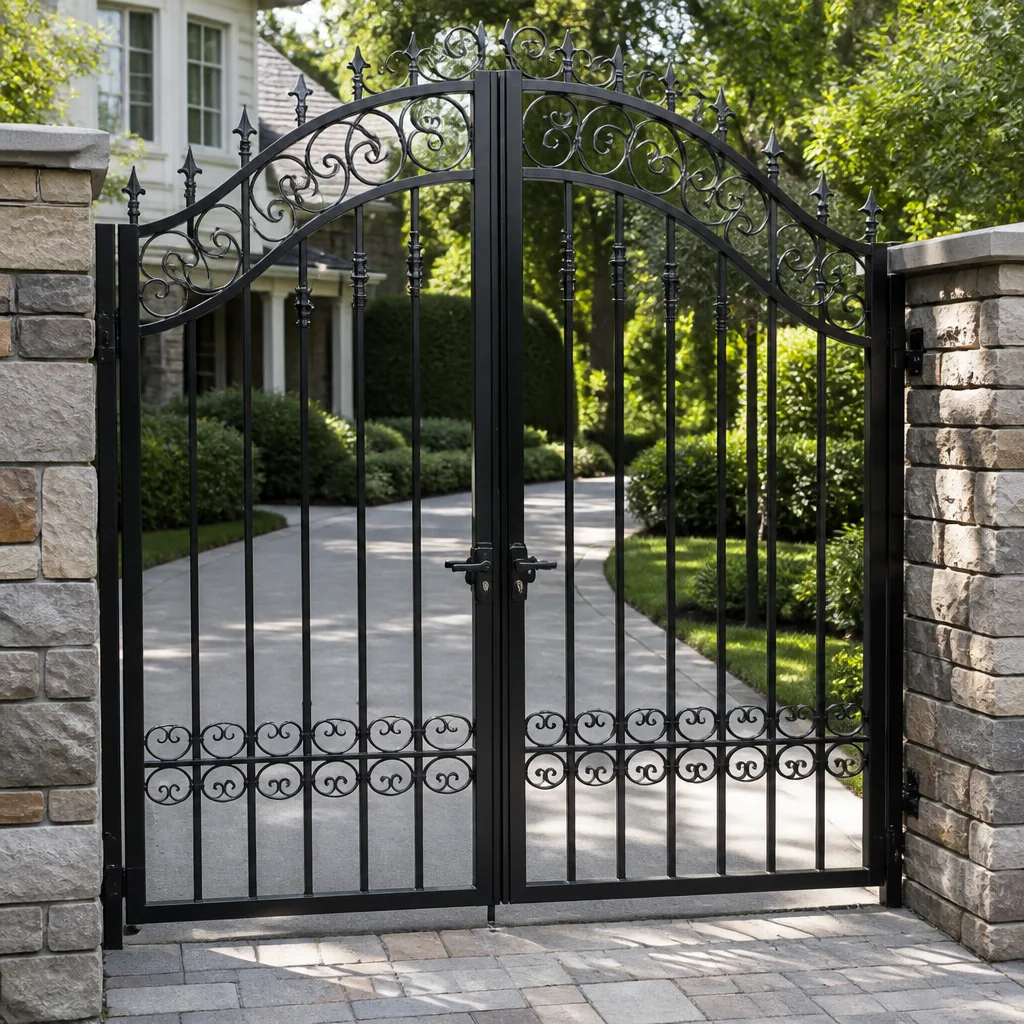
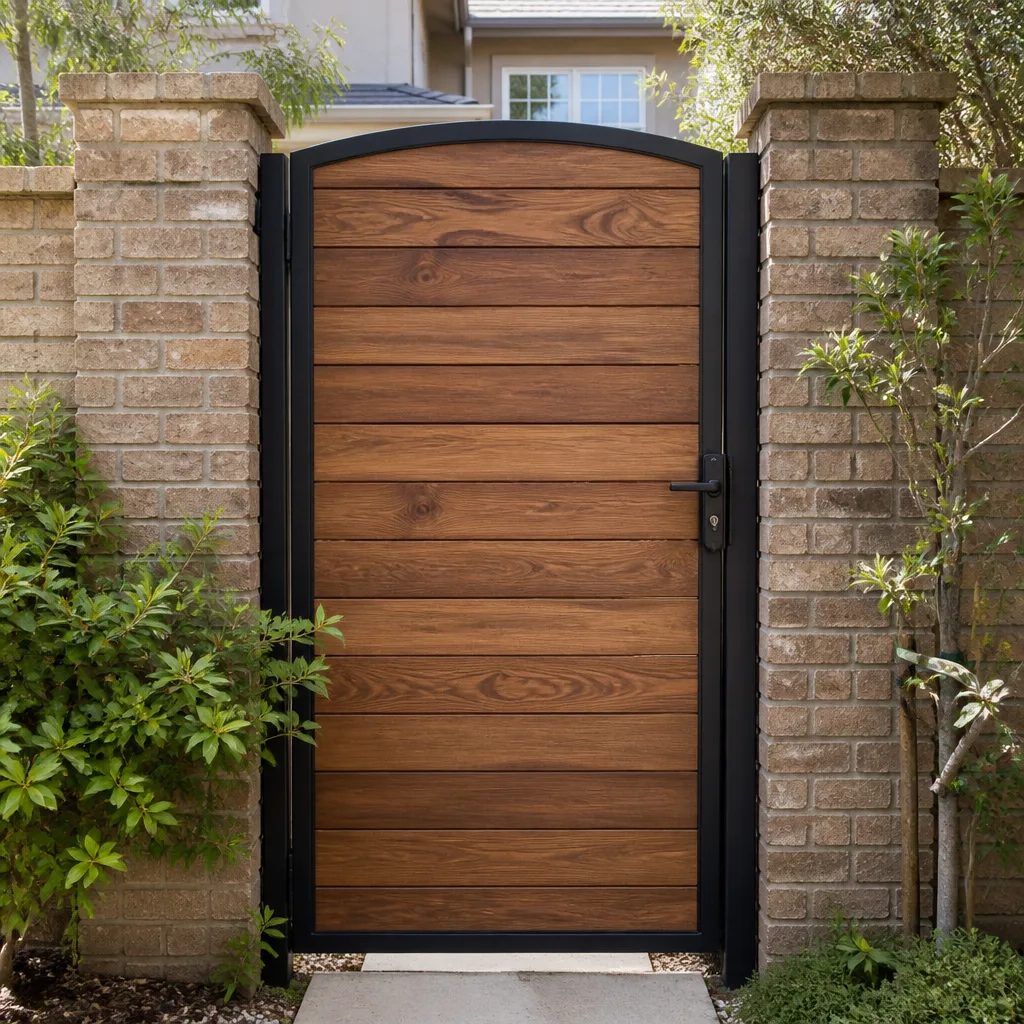
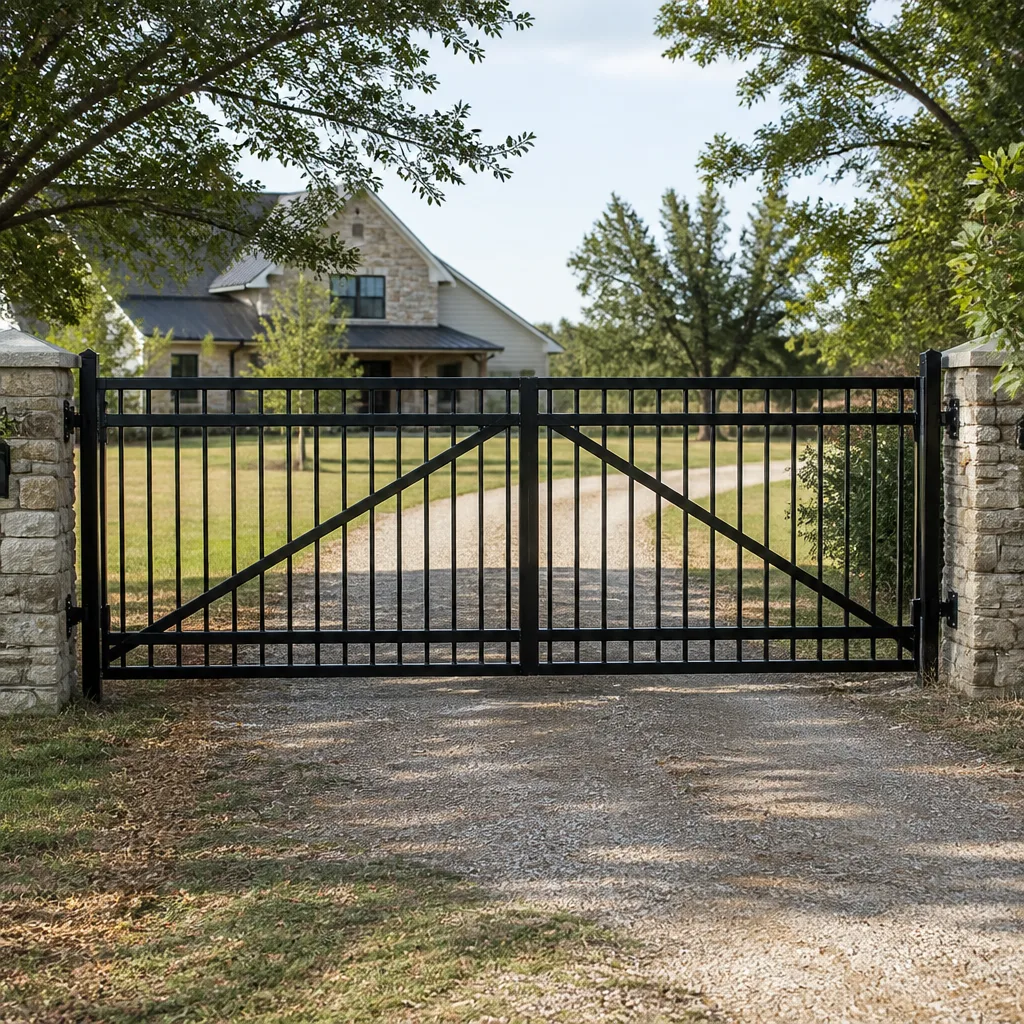
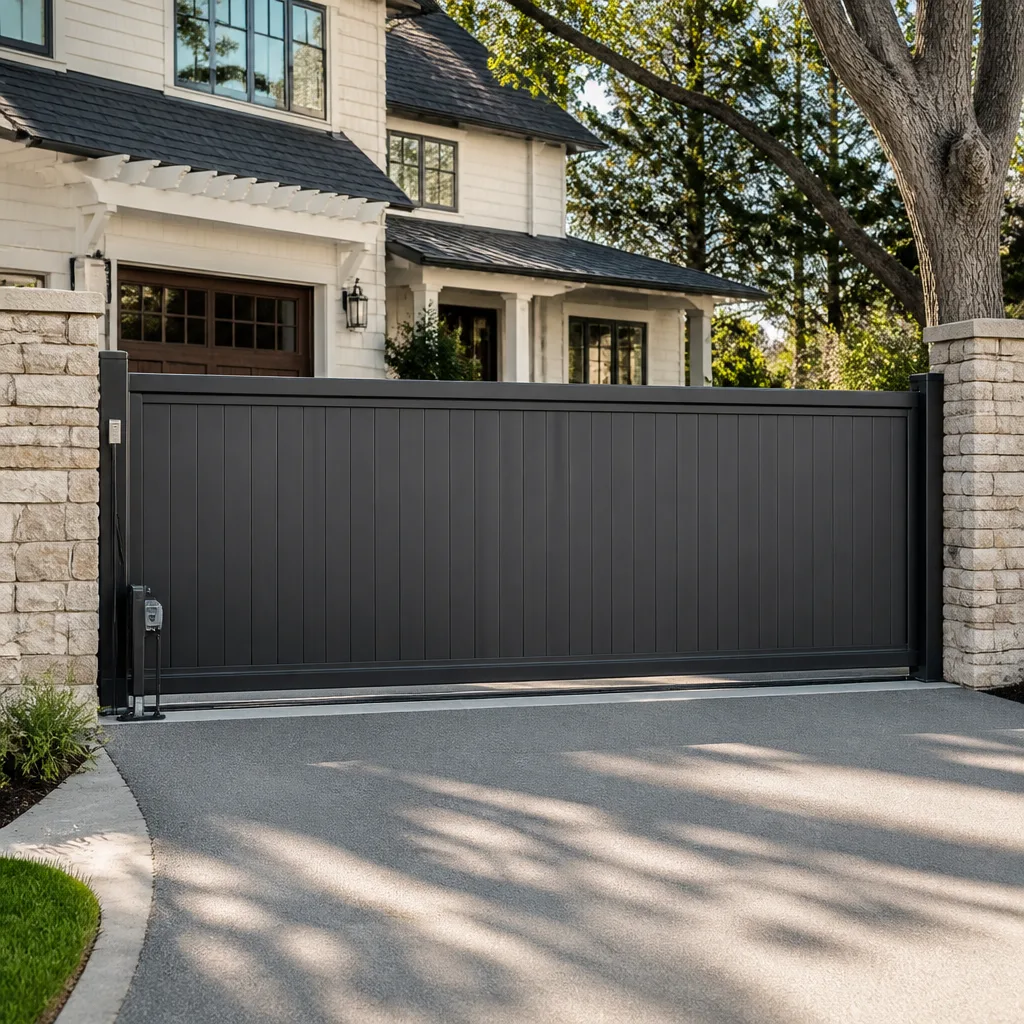
 Before
 After
After Before
 After
After Before
 After
AfterDIY vs Professional Gate Repair: The West Palm Beach Homeowner’s Decision Guide
Replacing a gate operator in Florida without a permit when one is required doesn’t just risk a fine. It can void your homeowner’s insurance coverage for any incident involving that gate until the work is properly inspected. That’s the quiet risk most DIY Gate Repair services guides never mention, and it’s one we’ve watched homeowners in West Palm Beach discover the hard way. This guide draws the line at specific repair types, not at a vague skill threshold. You’ll learn which failures are safe to attempt, which ones cross into licensed-work territory, what your warranty actually says about self-repair, and what documentation you lose when you fix it yourself.
Quick Answer
DIY gate repair in West Palm Beach is reasonable for three things: lubrication, sensor realignment, and remote reprogramming. Everything involving springs under tension, operator wiring, limit-switch adjustment, or structural repair crosses into work that requires a licensed professional. The decision isn’t about how handy you are. It’s about which failures create liability, warranty voidance, or code violations that cost more to fix than the original repair would have.
Table of Contents
- Which Gate Repairs Are Actually Safe to DIY in West Palm Beach
- The Exact Point Each DIY Repair Crosses Into Licensed-Work Territory
- What Your Gate Operator Warranty Actually Says About Self-Repair
- How Florida’s Electrical Code Treats Gate Operator Wiring
- The True Cost Comparison: DIY Attempt Plus Correction vs. Professional Work Done Once
- The Documentation You Lose When You DIY
- West Palm Beach Climate Factors That Change the DIY Calculus
- Common Mistakes to Avoid
- When to Call a Professional
- Frequently Asked Questions
BeforeAfterWhich Gate Repairs Are Actually Safe to DIY in West Palm Beach
Three categories of gate work are genuinely safe for a homeowner with basic tools and patience: lubrication, sensor alignment, and remote reprogramming. None of these involve tensioned components, line-voltage wiring, or structural modification. They’re maintenance tasks, not repairs in the mechanical sense, and the manufacturers themselves publish instructions for them.
1. Lubrication. Gate hinges, roller wheels, and chain drives need periodic lubrication in South Florida’s salt air and humidity. Use a dry silicone or lithium spray on pivot points, not WD-40. WD-40 is a water displacer and solvent, not a long-term lubricant. It’ll strip existing grease and accelerate wear on a sliding gate in a West Palm Beach neighborhood where the morning dew sits on metal for hours. A homeowner can handle this in 20 minutes with no risk.
2. Sensor alignment. Photo-eyes, the infrared beams that stop a gate if something crosses the path, drift out of alignment over time. If your gate refuses to close, the beams are the first thing to check. Clean the lenses with a dry cloth, loosen the bracket screw, and realign until the indicator light goes steady. This is gentle work. Nothing is under load.
3. Remote reprogramming. If a remote stops working, the fix is usually a fresh battery or a simple re-sync to the control board. Most brands, including FAAC and Linear, publish straightforward pairing sequences. The homeowner’s manual has the steps. This doesn’t touch the motor, the limits, or the wiring.
That’s the complete safe list. Everything else involves a component that can hurt you or a system that can fail dangerously. We’ll walk through the boundary line next.
The Exact Point Each DIY Repair Crosses Into Licensed-Work Territory
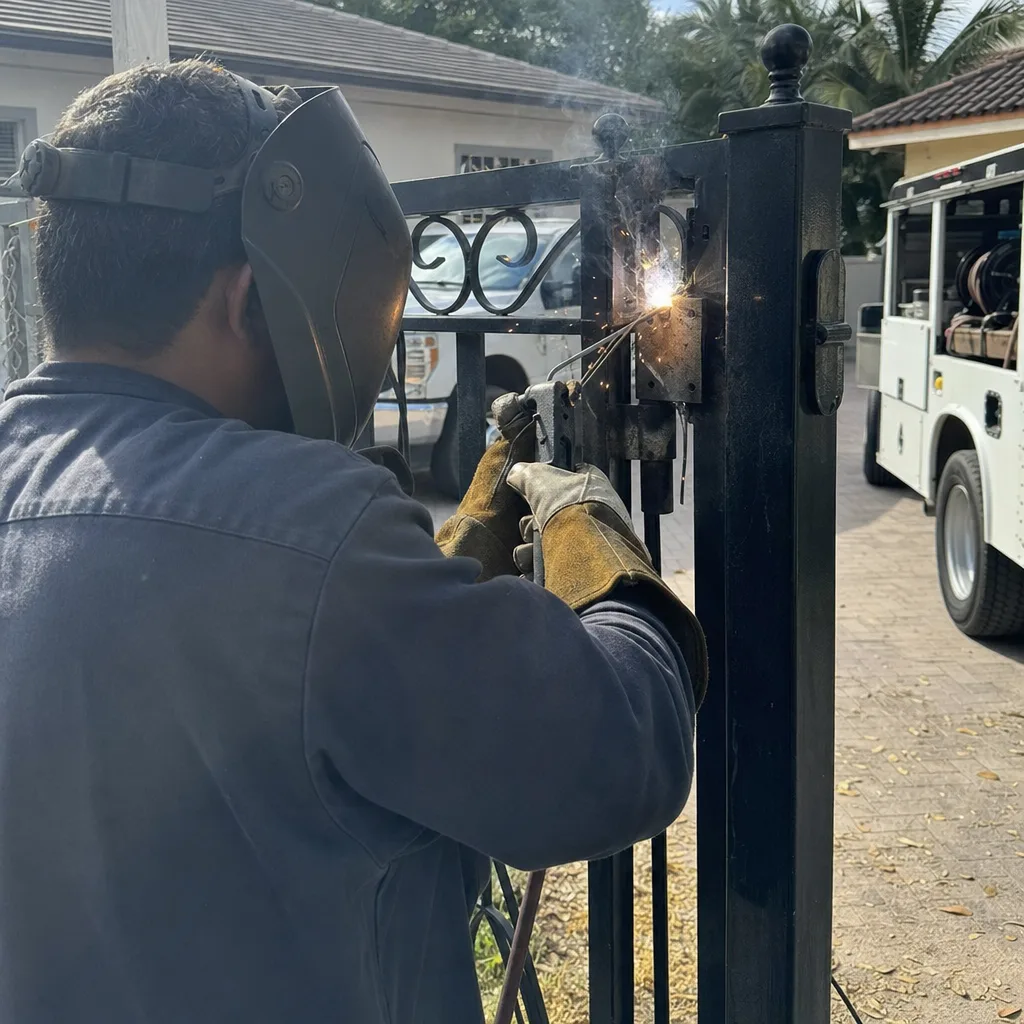
Each of the three safe tasks above has a clear boundary. Cross it, and you’re no longer doing maintenance. You’re doing repair work that Florida building codes and manufacturer warranties treat differently.
Lubrication crosses the line when you need to disassemble anything to reach the part. If the hinge pin won’t come out without cutting, if the chain guard needs to be unbolted, if the roller carriage has to be lifted off the rail, stop. On a BFT sliding gate, the roller carriage carries the full weight of a 400-to-800-pound leaf. Pulling that carriage off without supporting the gate properly is how homeowners lose fingers and how gates tip onto parked cars.
Sensor alignment crosses the line when realignment doesn’t fix the problem. If you’ve cleaned the lens and aligned the beam and the gate still misbehaves, the issue is upstream: in the wiring, the control board, or the sensor itself. The moment you open the operator housing to test voltage, you’re inside the electrical enclosure. Florida treats that as electrical work. See the code section below.
Remote reprogramming crosses the line when the receiver or control board is involved. Reprogramming a remote is one thing. Replacing a receiver board on a Viking operator means you’re wiring into low-voltage control circuits, which is where the line between “low voltage” and “line voltage” gets blurry in favor of “call someone who knows.”
Here’s the practical rule we use when we’re called out to West Palm Beach homes after a DIY attempt went sideways: if the repair requires opening the operator housing, cutting or splicing any wire, touching a spring or counterweight, or lifting the gate leaf off its hardware, it’s professional work. Not because you couldn’t figure it out. Because if you figure it out wrong, the gate fails in a way that can injure someone or damage property, and you own that outcome.
What Your Gate Operator Warranty Actually Says About Self-Repair
Major gate operator warranties in South Florida share common language about unauthorized work, and most homeowners never read it until after a claim is denied. The relevant clause usually says something close to: this warranty does not cover damage caused by service performed by anyone other than an authorized dealer or qualified service technician.
That sentence matters more than most people think. A FAAC operator installed in a West Palm Beach community might carry a 2-to-5-year warranty on the motor and control board. If you open the housing and replace a capacitor yourself, and three months later the board fails, the manufacturer can point to your work as the reason. You’ll be arguing with a warranty department, not fixing a gate.
BFT, Linear, and Viking warranties have similar exclusions. The practical effect: a DIY repair that goes wrong converts a warranty-backed component into an out-of-pocket replacement. We’ve seen a $40 DIY capacitor replacement turn into an $800 control board replacement because the warranty was voided and the original part number was no longer documented.
There’s a middle path worth knowing about. Some manufacturers’ warranties remain intact for simple owner maintenance: lubrication, sensor cleaning, remote battery replacement. Those are the three safe tasks we listed earlier. The warranty language often carves out “normal owner maintenance” as acceptable. What it never carves out is “repair performed by the owner.” That’s the line.
If you’re not sure where your operator’s warranty stands, call the manufacturer with your model and serial number before you start the job. Or bring the paperwork to a professional and ask them to confirm. The free second opinion we offer at Vance Gate Repair West Palm Beach home applies to written estimates from other companies, but we’ll also look at warranty language and tell you honestly whether a repair is worth filing before you touch anything.
How Florida’s Electrical Code Treats Gate Operator Wiring
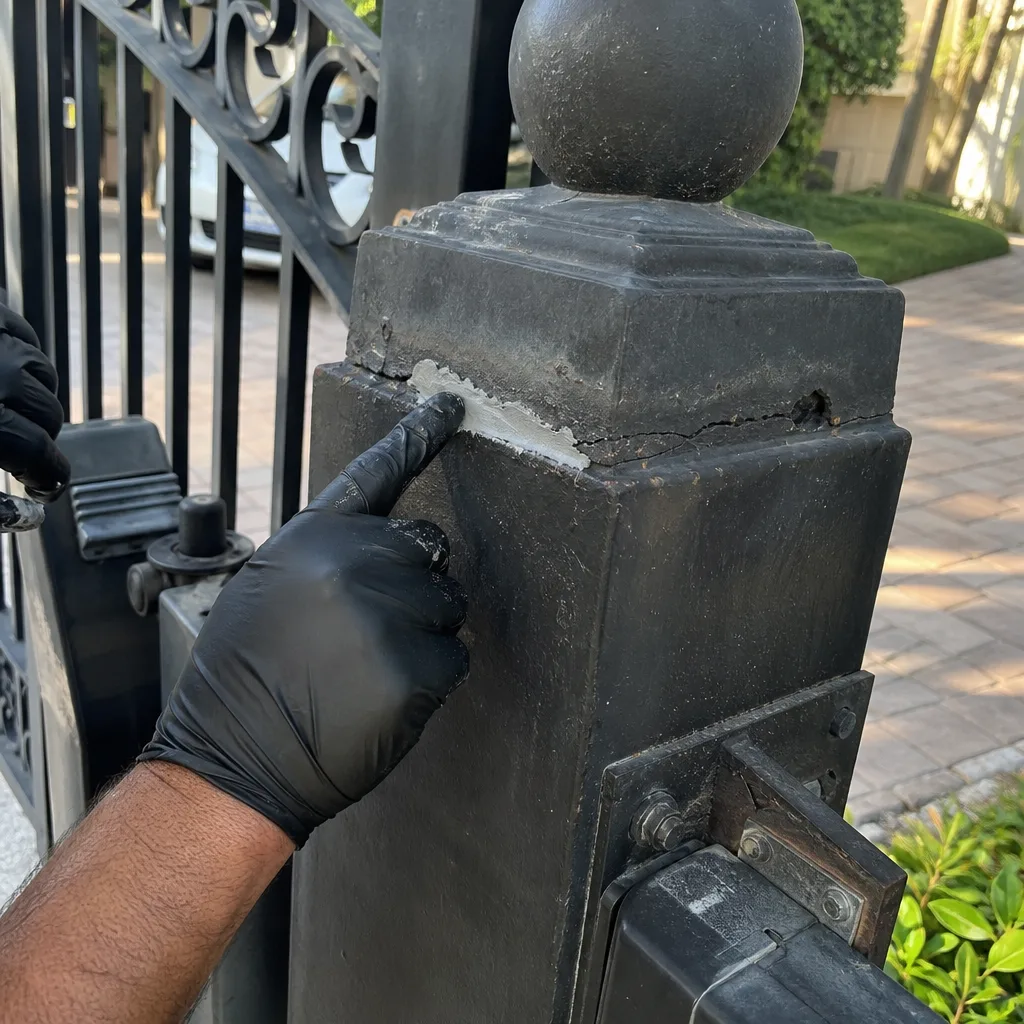
The low-voltage assumption most DIYers make isn’t always accurate. Gate operators run on two different electrical systems. The motor runs on line voltage: 120V or 240V AC from a dedicated circuit. The controls, sensors, and accessories run on low voltage: 12V or 24V DC. The boundary between those systems sits inside the operator housing, and Florida’s electrical code treats anything on the line-voltage side as electrical work requiring a licensed contractor.
Yes, some operators are solar or battery-powered with no line-voltage connection at all. But most permanently installed operators in West Palm Beach draw from a dedicated branch circuit that a previous electrician pulled. That circuit has a breaker, a disconnect, and possibly a GFCI requirement depending on the install location. Touch it, and you’re doing electrical work.
Florida has adopted the National Electrical Code (NEC) with state-specific amendments. NEC Article 430 covers motors and motor circuits. NEC Article 680 covers pools; Article 682 covers bodies of water. A gate operator within a certain distance of a pool, canal, or the Intracoastal may trigger additional grounding and bonding requirements that a homeowner would never think to check. In West Palm Beach, where many homes sit near canals or have pools, this is not a hypothetical.
There’s also the permit question. The Florida Building Code requires permits for most electrical work beyond the stated homeowner allowance. The homeowner allowance typically covers replacing a like-for-like switch or outlet, not adding or modifying a motor circuit. Replacing a gate operator that requires running new conduit, a new breaker, or a new disconnect means a permit. If a future home inspection finds unpermitted electrical work, it can hold up a sale. If an insurance claim involves the gate, the insurer can deny coverage for unpermitted modifications.
This is why we tell West Palm Beach homeowners: the moment the repair touches anything upstream of the operator’s low-voltage terminal strip, stop. Call a licensed electrical contractor, or call a gate company that works with one. The cost of a permit and an electrician’s hour is less than the cost of explaining unpermitted work to a home inspector at closing.
The True Cost Comparison: DIY Attempt Plus Correction vs. Professional Work Done Once
Everyone does the same math. A replacement control board online costs $175. A gate company charges $450. The board is “the same part,” so the savings look like $275. Here’s the number most people don’t compute: what does it cost when the DIY attempt doesn’t work, or works for a month and then fails, or solves the wrong problem entirely?
The DIY-attempt-plus-correction sequence usually looks like this:
- Homeowner orders a part ($80-$350 depending on component)
- Part arrives in 3-7 days; gate is stuck open or closed during that time
- Installation takes 1-4 hours; something doesn’t match the YouTube video
- The gate works, doesn’t work, or works oddly
- A professional is called, often after a near-miss or a failure
- The professional diagnoses the actual problem and finds the DIY part wasn’t the root cause or was installed incorrectly
- Professional repair costs $300-$700, and now includes correcting the DIY work
The total is not $175 versus $450. It’s $175 plus three evenings plus a week of a non-functional gate plus $700. In our experience serving Gate Repair in West Palm Beach, roughly one in four callouts involves correcting or completing work a homeowner started. That’s not a criticism of homeowners. It’s a reflection of how gate systems actually fail: the visible symptom and the root cause are often different things.
Here’s the table version that makes the comparison honest:
- Lubrication DIY: $10-$30 in supplies, 20 minutes, no risk, no correction cost. Clear win for DIY.
- Sensor realignment DIY: $0 in parts, 15 minutes, no risk. Clear win for DIY, assuming it works.
- Remote reprogramming DIY: $0-$5 battery, 10 minutes. Clear win. If it doesn’t work, the correction cost is a $90-$150 service call.
- Control board replacement DIY: $150-$400 part, 2-4 hours, moderate electrical risk, possible warranty void, possible insurance implication. Correction cost if wrong: $400-$800. Professional cost done once: $400-$800. Honest math: a wash, with more risk.
- Gate spring/counterweight DIY: $30-$80 part, 1-2 hours, high injury risk (fingers, hands, face). Correction cost if it goes wrong: emergency room co-pay plus professional repair. Never worth it.
- Motor replacement DIY: $300-$1,200 part, half a day, electrical and code risk, permit question. Correction cost: $600-$1,500 plus any unpermitted-work consequences. Not worth it.
The realistic comparison isn’t parts versus parts. It’s parts plus your time plus your risk plus the probable correction against the cost of it being done once, with documentation, under warranty. On the three safe tasks, DIY wins. On everything else, the expected value flips.
The Documentation You Lose When You DIY
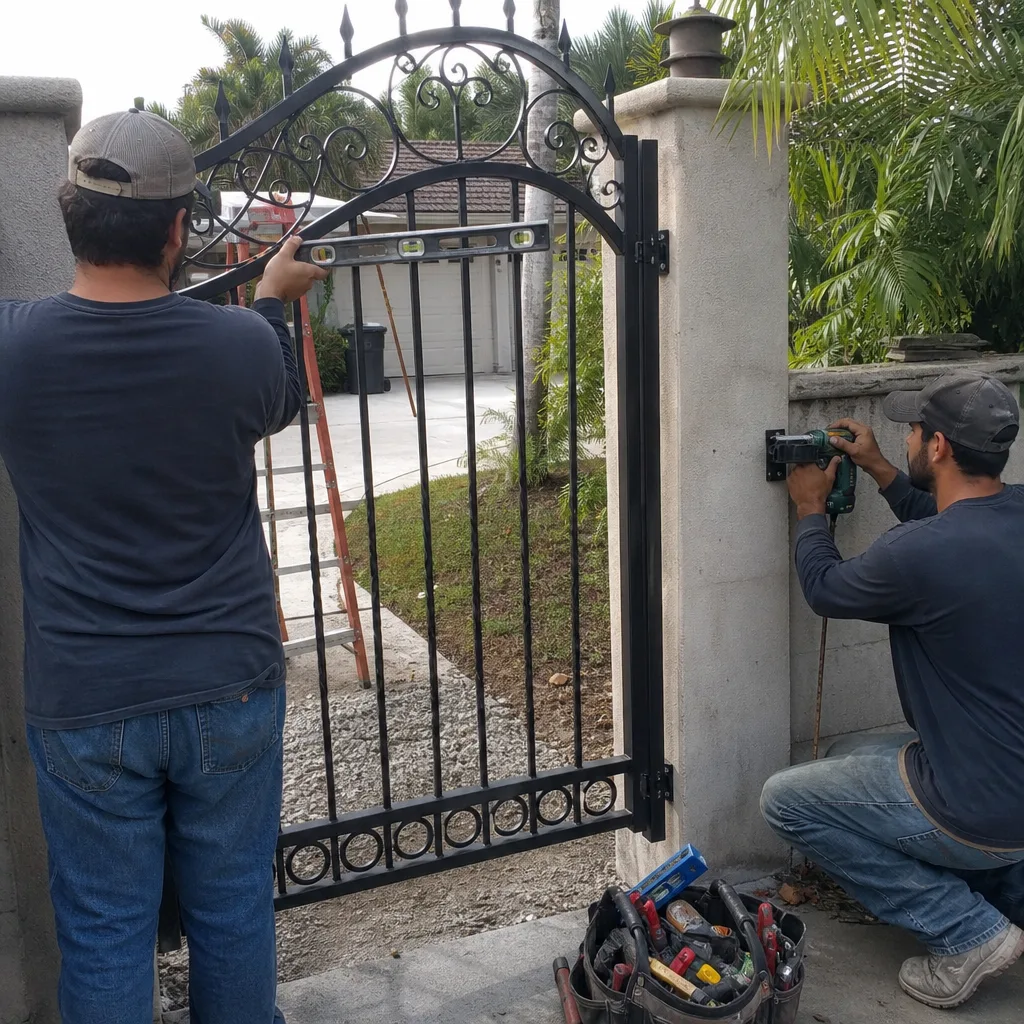
Every professional Gate Motor & Opener in West Palm Beach service call ends with something most homeowners never think to ask for: a record of what was found, what was set, and what was installed. We include this as a matter of policy, not as an upsell. Adrian Vance started doing this in 2014 on commercial access-control sites, where a missing wiring diagram means the next technician spends an hour reverse-engineering someone else’s work at $120 an hour. The habit carried over to every residential gate we touch.
When you DIY, you create none of that. No wiring diagram. No limit-switch baseline for where the travel stops were set. No photo of the capacitor’s orientation before it was removed. No record of the torque setting on the operator. The gate works, or seems to, and you move on.
Then, six months later, the gate starts creeping. The next technician opens the housing and sees a board that’s been replaced, wiring that’s been moved, and no documentation of what’s original and what’s not. He spends 45 minutes figuring out what you did before he can diagnose what’s wrong. That 45 minutes is billable. A homeowner who works with a professional from the start gets a gate that still needs repair, but now the technician knows what happened last time and doesn’t pay twice to rediscover the same problem.
This is the quiet cost of DIY that never shows up in a parts comparison. Documentation is insurance against repeat diagnostic fees. If your gate has a motor, a control board, and limit switches, it will fail again eventually. Whether the next failure costs one hour of labor or three depends on whether anyone wrote down what was done the first time.
Our policy is documented in writing and follows what we call The Haven Standard: a written scope, a written price, and photographic evidence on every visit. Under Clause 4 (Evidence on every job), every visit includes a documented photo record at no additional charge. You leave with a photo log of every adjustment, the part number installed, and a written record of the limit-switch readings. If you ever work with another company, hand them that record. They’ll know exactly what they’re looking at.
West Palm Beach Climate Factors That Change the DIY Calculus
West Palm Beach’s climate makes gate maintenance different here than in, say, Atlanta or Dallas. Three factors interact with every gate on a daily basis: humidity, salt air, and storm season.
Humidity and salt. Homes in West Palm Beach near the Intracoastal or within a few miles of the ocean get salt spray that accelerates corrosion on exposed metal: hinges, chain drives, limit-switch contacts, and control board traces. A gate that works fine in a dry climate will develop green corrosion on the board connectors here within two or three years. A homeowner who opens the housing for a DIY repair and doesn’t seal the enclosure correctly afterward creates a new moisture entry point. Six months later, the board corrodes and fails, and the warranty claim is complicated by the fact that the housing was opened by an unauthorized person.
Lightning and surge. Florida leads the country in lightning strikes per square mile. Gate operators are outdoor electrical devices on metal structures, which makes them natural surge targets. A professional replacement includes surge protection on the line-voltage side, something most DIY board replacements skip. The result is a repaired gate that works until the next summer thunderstorm, then fails again from the same surge path that wasn’t addressed.
Storm season and hurricane prep. Every hurricane season, West Palm Beach homeowners need their gates operational for evacuation and secure after a storm. A DIY repair that leaves the gate working “mostly” can become a real problem when a hurricane warning hits and the gate won’t open at all because the half-finished repair couldn’t handle the rain. Our call volume spikes in the 48 hours before a named storm arrives, and a meaningful portion of those calls are gates that were partially repaired by their owners and failed when they were needed most. If you’re going to do DIY work, do it in February, not August.
These climate factors don’t make DIY impossible. They make the failure modes more expensive and the timeline less forgiving. A gate maintenance mistake in a temperate climate is inconvenient. The same mistake in West Palm Beach, where moisture and lightning are constant, becomes a component failure within months.
Common Mistakes to Avoid
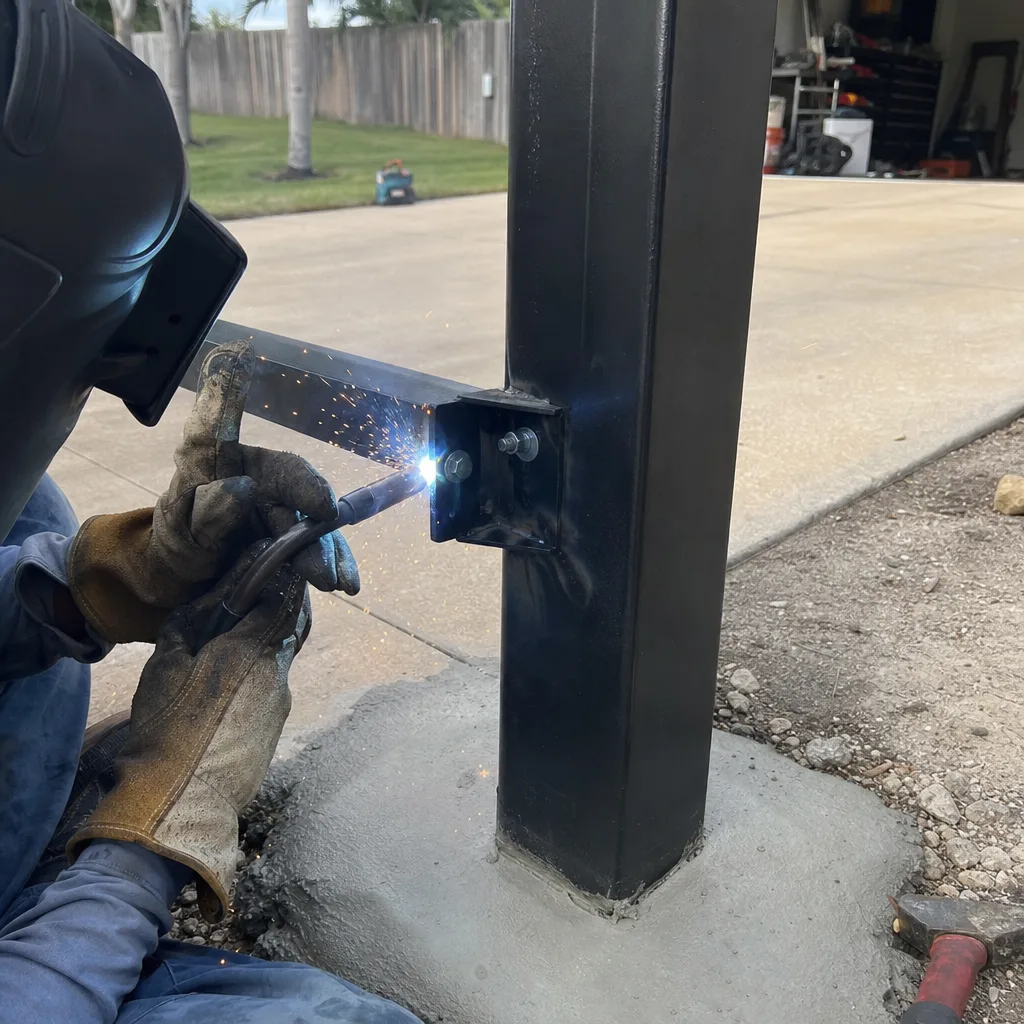
- Using WD-40 as a gate lubricant. It washes away existing grease and accelerates wear, especially on chain drives near the coast. Use dry silicone or a lithium spray made for gate hardware.
- Assuming all low-voltage work is DIY-safe. The control side is low voltage, but the motor side is line voltage, and they share a housing. If you can’t confidently separate the two, don’t open the cover.
- Forcing a gate that won’t move. If the operator is straining or the gate is binding, forcing it manually can bend the rack, strip the gear, or snap a chain. The bind is the problem. Find it first.
- Replacing parts before diagnosing. A gate that won’t open could be a dead remote battery, a misaligned sensor, a blown fuse, a failed capacitor, or a bad board. Replacing the board first is the most expensive way to do process-of-elimination.
- Ignoring the permit question on motor replacement. In West Palm Beach, replacing an operator that involves new or modified line-voltage wiring likely requires a permit. Unpermitted work surfaces at inspection and can complicate a sale.
- Skipping the documentation. If you do DIY work, at minimum photograph everything before and after: wire positions, board orientation, limit-switch location. Your future self, or your future technician, will need those photos.
- Doing your first gate repair in hurricane season. If your first DIY attempt goes wrong in August, you may not have a working gate when the evacuation order comes. Practice in the dry season.
When to Call a Professional
Call a professional when the repair involves springs, counterweights, motor replacement, control board replacement, any wiring beyond battery swaps, or any symptom you can’t trace to a dirty sensor or dead remote. Also call when the gate has failed in a way that leaves your property unsecured, when your HOA has a compliance deadline, or when you’ve already attempted a repair and it didn’t hold. Vance Gate Repair West Palm Beach offers free estimates in West Palm Beach. Call (561) 725-8048 and a live person answers, 24 hours a day.
Frequently Asked Questions
Yes, for basic owner maintenance like lubrication, sensor cleaning, and remote battery or pairing work. Florida law and the state’s building code draw the line at line-voltage electrical work, which requires a licensed electrical contractor. If the repair involves the motor circuit, a new breaker, or conduit, you need a permit and a licensed professional.
Potentially, yes. Most major brands, including FAAC, BFT, and Linear, exclude coverage for damage caused by unauthorized repair. Owner maintenance tasks like lubrication and sensor cleaning are usually safe. Opening the operator housing and replacing electrical components is where warranties get denied.
A typical service call runs $90 to $150 for diagnosis, with common repairs like sensor replacement, limit-switch reset, or remote reprogramming typically falling in the $150 to $300 range. Motor replacement is the biggest expense, usually $600 to $1,500 depending on brand and model. Every price is written and agreed before work starts, which is a standard we apply on every job.
You physically can, but it’s usually a bad decision. Motor replacement often involves line-voltage wiring, a permit, surge protection, and reprogramming limit switches. A DIY motor swap that skips these leaves you with a gate that works temporarily and fails during the next surge event. A professional swap done once costs less than a DIY swap plus the correction.
Lubricate pivot points with a dry silicone spray every 3 to 4 months, clean photo-eye lenses whenever the gate acts up, replace remote batteries annually, and hose salt deposits off metal hardware if you live near the water. These tasks are safe, required by most warranty language as owner maintenance, and they genuinely extend equipment life in this climate.
Because gates fail again, and the next failure costs less to diagnose when a record exists of what was done previously. A wiring diagram, limit-switch baseline, photo log, and part number record saves the next technician 30 to 60 minutes of reverse-engineering, which is billable time. Professional service should include this as a standard deliverable.
The Bottom Line
DIY gate repair in West Palm Beach has a clear, narrow lane: lubricate, align sensors, reprogram remotes. Those three tasks are genuinely safe, cheap, and within the owner-maintenance language of most warranties. Everything else carries liability, warranty, permit, or insurance risk that outsizes the parts savings. The honest math says professional repair done once, with documentation and a written price, is the cheaper option for every repair beyond that narrow lane. If you want a gate that keeps working through hurricane season, or a second opinion on a written estimate you already have, call us at (561) 725-8048. For more on what we repair and install, see our Gate Installation in West Palm Beach page.
Written by Adrian Vance, Owner at Vance Gate Repair West Palm Beach, serving West Palm Beach since 2014. For more guides & resources, visit our blog.