
Last updated September 20, 2026
Free on-site gate assessment - hinges, posts, and your LiftMaster or Nice gate operator checked before anything is quoted
The assessment is free and the quote is the invoice.


 Before
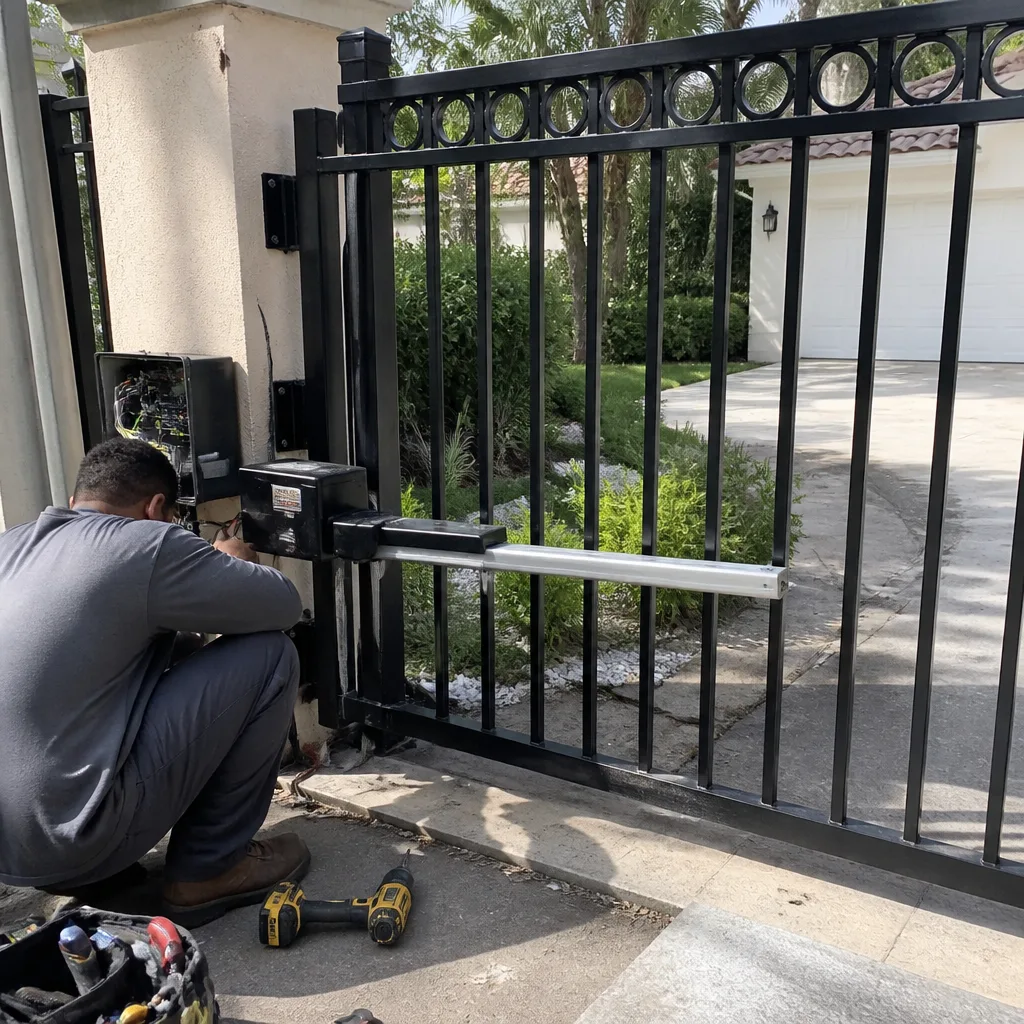 After
After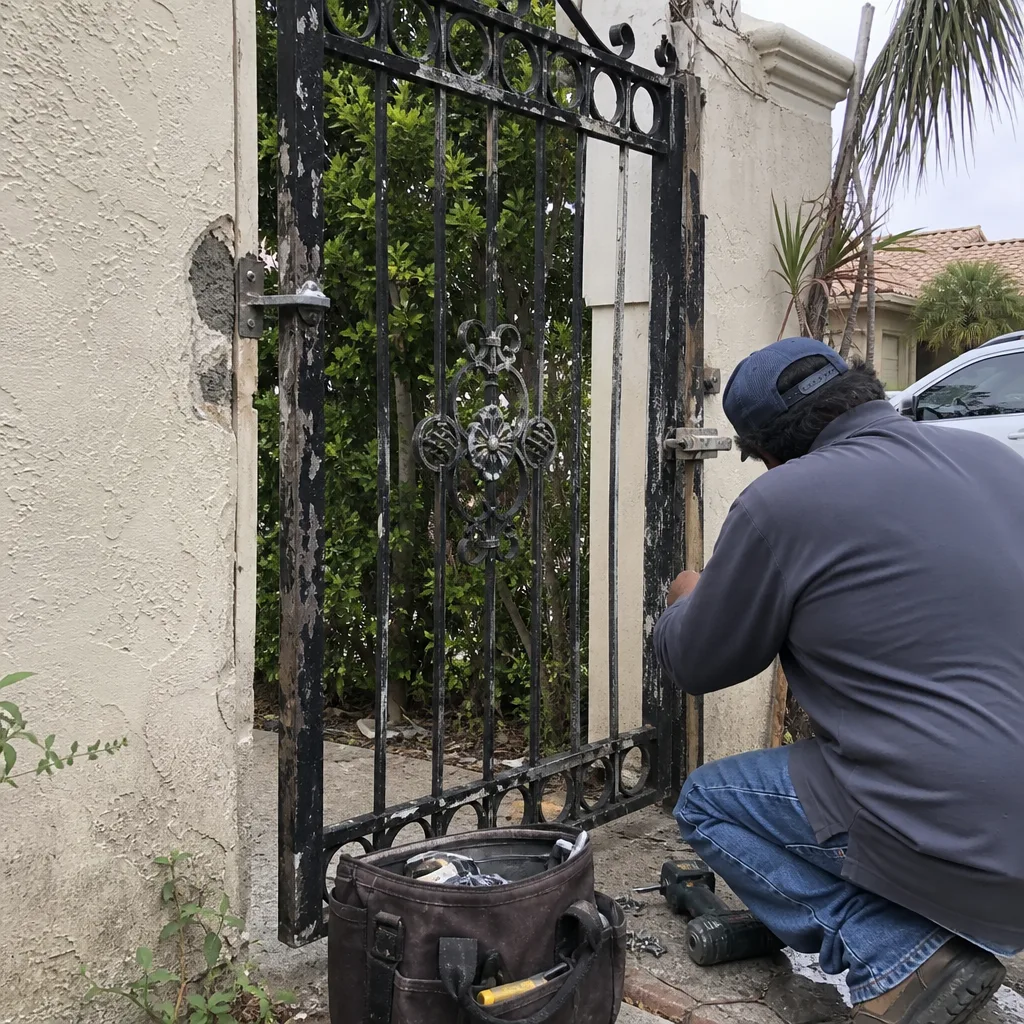 Before
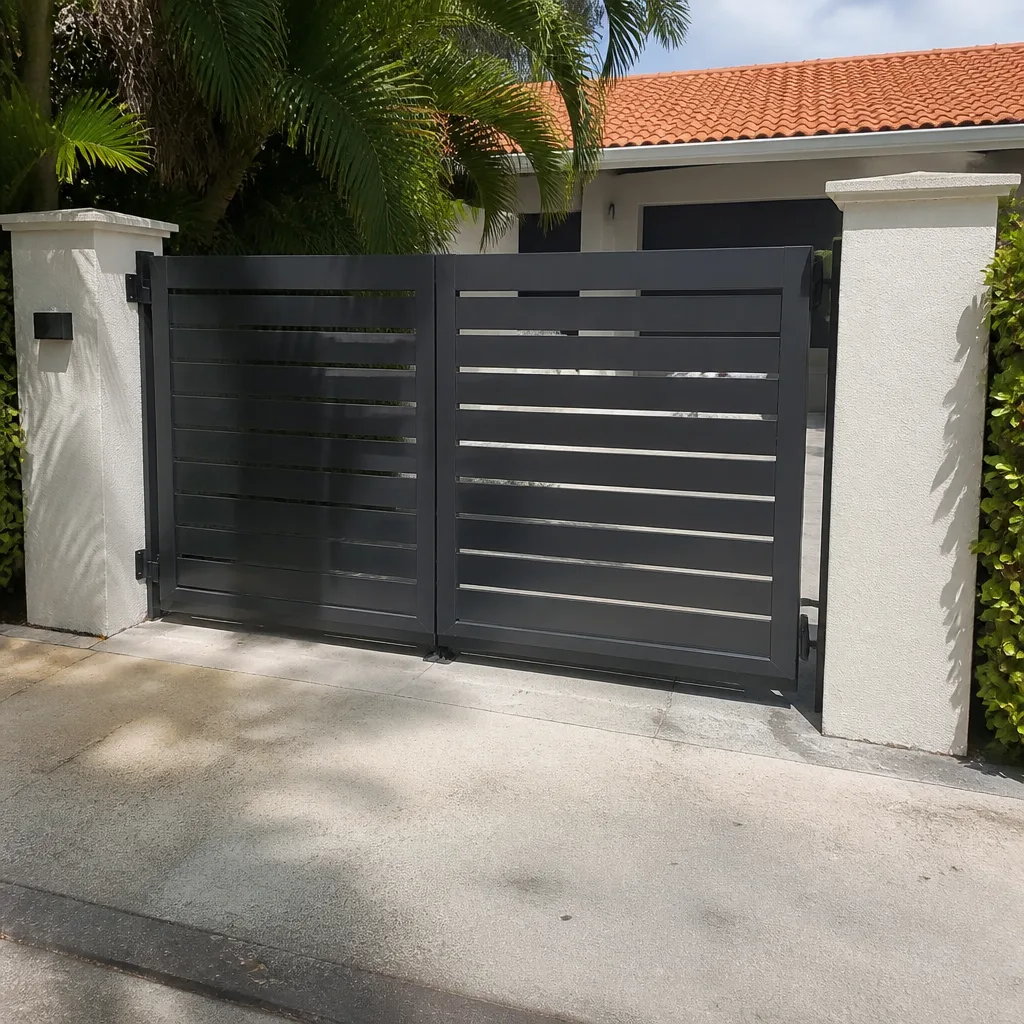 After
After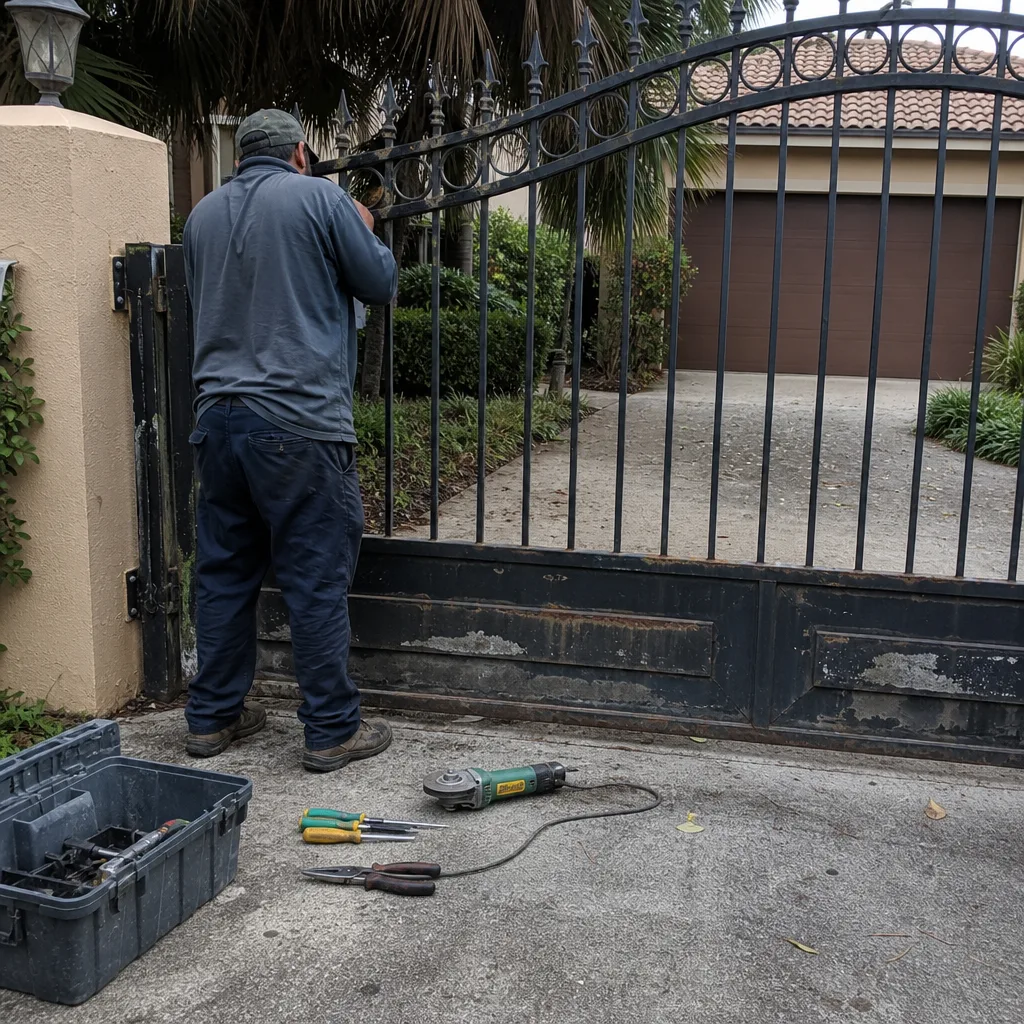 Before
 After
AfterGate Repair Maintenance Checklist for West Palm Beach Homeowners
Hinge wear, not motor failure, is the leading cause of gate operator burnout in coastal Florida. The motor gets blamed and replaced, but the real problem is usually a pair of hinges that have been grinding against salt air and humidity for six years without anyone touching them. By the time the operator starts laboring, the hinges have already been compromised for months, maybe years. This guide gives West Palm Beach homeowners a maintenance checklist built around what actually degrades first in this climate, with measurable thresholds so you know whether a condition is something to monitor or something to call about for gate repair. You’ll also learn how to build a one-page site record that any future technician can read without guessing.
Quick Answer
A proper gate maintenance checklist for West Palm Beach homes covers hinge resistance and lubrication, limit-switch drift, salt-air corrosion at connection points, and a seasonal schedule tied to hurricane season rather than generic quarterly intervals. Most gates need hinge lubrication and a visual inspection every 90 days, with a full documented inspection before June 1 and again after any named storm passes within 50 miles of the coast. If hinge movement requires more than light finger pressure to swing a disconnected operator, that extra resistance is already shortening the life of the motor.
Table of Contents
- Hinge Wear: The Overlooked Operator Killer
- Limit-Switch Drift: How to Photograph and Log Your Baseline
- Salt-Air Corrosion: The Four Connection Points That Fail First
- The West Palm Beach Weather Calendar: When to Inspect, Not Just Quarterly
- How to Create a One-Page Site Record Any Technician Can Read
- Brand-Specific Notes: LiftMaster, FAAC, Mighty Mule, BFT
- Common Mistakes to Avoid
- When to Call a Professional
- Frequently Asked Questions
BeforeAfterHinge Wear: The Overlooked Operator Killer
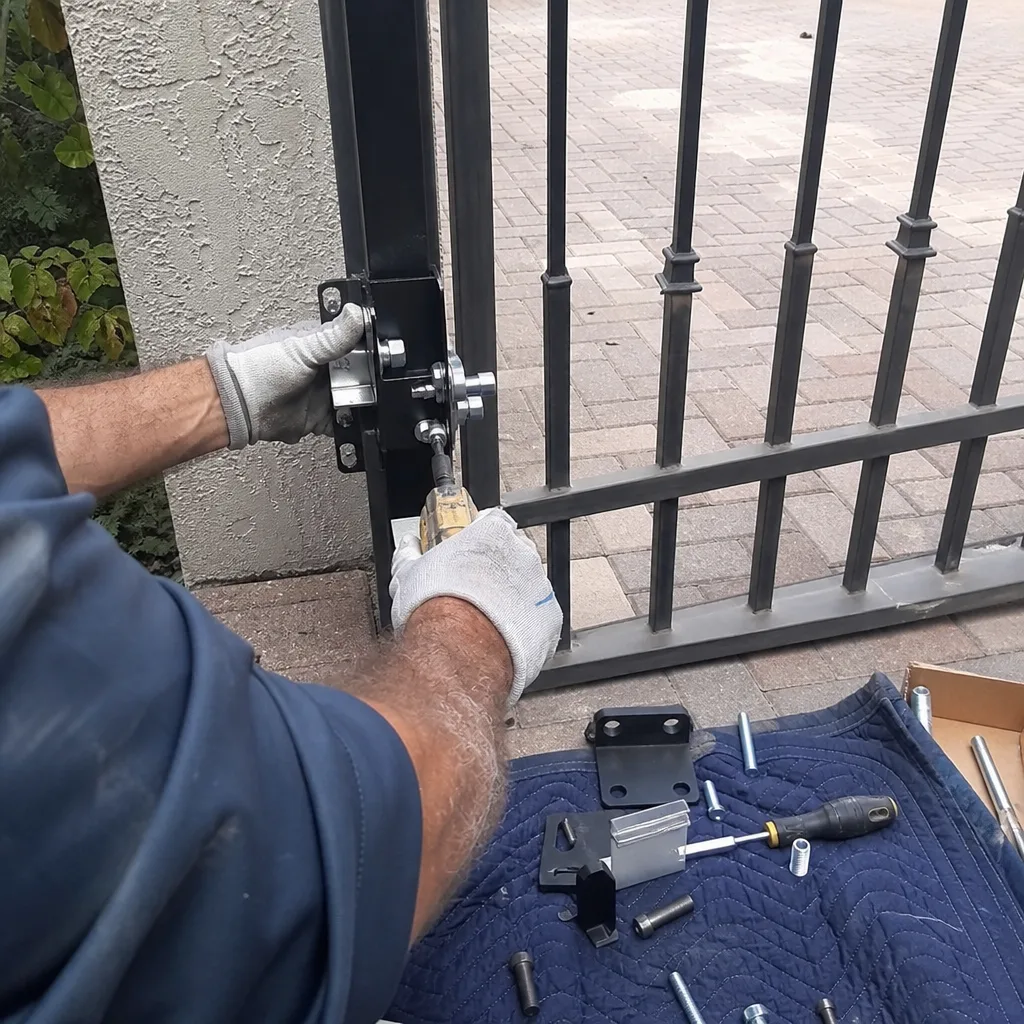
In our experience at Vance Gate Repair West Palm Beach home, roughly six out of ten operator replacements we perform could have been avoided with hinge maintenance. The operator, whether it’s a LiftMaster, a FAAC, or a Mighty Mule, is sized to move a gate that swings freely. When a hinge starts binding, the operator doesn’t know the hinge is the problem. It just pulls harder. More current through the board, more heat in the capacitor, more wear on the gear train. The operator dies a few years early and the homeowner assumes it was a cheap motor. It wasn’t. It was a neglected hinge.
Here’s the threshold to check:
- Disconnect the operator. Most residential swing and slide gates have a manual release handle, often a small lever or knob on the operator arm.
- Swing or slide the gate by hand. A properly maintained gate moves with light, consistent pressure. You should be able to move it with two fingers.
- Watch for the telltale signs. If the gate hesitates mid-travel, feels heavier at one end, or you hear a metallic groan, the hinge is telling you something.
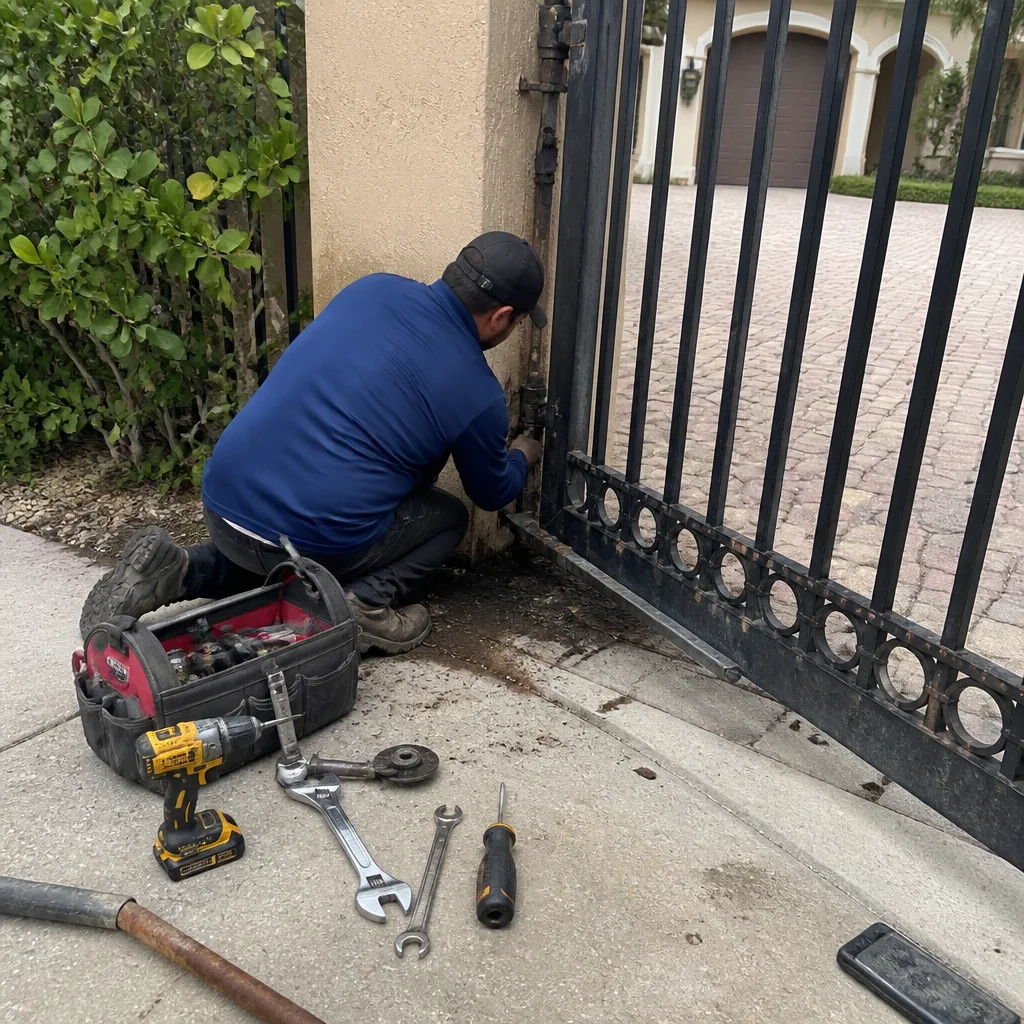
West Palm Beach humidity accelerates hinge wear in a specific way. The constant moisture in the air breaks down grease faster than dry heat would, and when the grease goes, the metal pin starts wearing against the housing. We regularly pull hinges in neighborhoods like Flamingo Park and Pineapple Park that have visible scoring on the pin after five or six years. Those gates felt fine to the homeowner because they had never swung one with fresh hinges.
What you can do: apply a marine-grade lithium grease to hinge pins every 90 days. Wipe the old grease off first, don’t just add on top. If you see rust-colored paste forming where the pin enters the housing, that’s metal particles suspended in old grease. Wipe it clean, regrease, and log it. If the gate still feels heavy after greasing, the hinge pin itself is likely scored and the fix is mechanical, not lubricant.
Limit-Switch Drift: How to Photograph and Log Your Baseline
Limit switches are the mechanical or magnetic stops that tell the operator where the gate is in its travel. On a LiftMaster or FAAC arm, they’re often adjustable cams inside the operator housing. On a slide gate, they may be magnetic pickups mounted on the rail. When they drift, the gate starts slamming into the stop at the end of travel, or stops short and reverses. Drift is gradual. Most homeowners don’t notice until the gate starts behaving badly, and by then the overload has already stressed the operator.
Create a baseline today, when the gate is working properly. Here’s the step-by-step:
- Open the gate fully and photograph the limit switch from two angles. Get close enough that the position of the switch relative to the cam or magnet is visible. Use your phone, but get sharp focus.
- Close the gate fully and photograph again. Same two angles.
- Note the date and time in your photo metadata. If you don’t have a photo log, write it in a note on the same phone.
- Store those four photos in a folder called “Gate Baseline.” Share it with whoever else in the household might call a technician.
Drift looks like this: the switch that was flush against the cam is now a quarter-inch off. The magnet that was centered on the pickup has shifted. When you compare a new photo to your baseline and something has clearly moved, that’s drift. You don’t need to know what it means internally. You just need to know it moved, and that baseline photo is the evidence.
In West Palm Beach, we see limit-switch drift most often after high-wind events. A gust-driven gate that whips against the stops can knock a cam out of position. That’s why our Gate Repair in West Palm Beach page recommends a post-storm inspection, not just a pre-season one.
When we do a service visit, we photograph the limit-switch positions before and after adjustment and leave those photos with the homeowner. If you have your own baseline, you’re not starting from zero when the gate acts up. You’ve already done half the diagnostic work.
Salt-Air Corrosion: The Four Connection Points That Fail First
West Palm Beach sits about two miles from the Atlantic at its eastern edge, and the marine layer reaches much farther inland than most homeowners assume. Salt air, combined with the humidity, concentrates corrosion in very specific places. These four connection points are where we see failures repeat year after year:
- The operator’s power connection blocks. Terminals where line voltage enters the operator corrode fastest. Especially on slide-gate installations near drainage swales where standing water raises local humidity.
- The battery backup terminals. If you have a battery-backed operator, the battery posts and pigtail connectors are a corrosion magnet. Even sealed batteries eventually seep micro-fumes that corrode nearby metal.
- The photo-eye wiring. The infrared beam sensors (photo-eyes) are mounted low, close to the ground, and the wire glands at the back of the housing get hammered by rain splash and salt mist.
- Ground lugs. Anywhere a bare ground wire bolts to the gate frame or the operator chassis. We’ve seen gates where the only electrical failure was a ground lug that turned to white powder.
Cleaning these connections without voiding equipment warranties is important. Most manufacturers, including LiftMaster and FAAC, will deny a warranty claim if they see evidence of corrosion damage from improper cleaning. The safe method:
- Disconnect power at the breaker before touching anything. Not the switch on the operator. The breaker.
- Use a dry microfiber cloth first. Remove loose dust and salt film without introducing liquid.
- If you need a cleaner, use a non-conductive electronics-grade contact cleaner. Never WD-40 on electrical connections. Never water.
- Photograph before and after. That documentation is your warranty trail.
If a connection is already white, green, or crumbly, don’t try to scrub it back. The metal underneath is compromised. That’s a repair, not a cleaning. In our experience, homeowners in neighborhoods closer to the Intracoastal, like Prospect Park or the waterfront streets around West Palm Beach’s southern edge, should do this connection check twice a year. Inland neighborhoods can get away with once annually, tied to the pre-hurricane inspection.
The West Palm Beach Weather Calendar: When to Inspect, Not Just Quarterly
Generic maintenance advice says “inspect quarterly.” That’s better than nothing, but it ignores the actual rhythm of the season in West Palm Beach. Florida weather doesn’t degrade gates evenly across the year. It clusters the damage into two windows: the pre-hurricane buildup from April through June, and the immediate aftermath of any storm between June and November. The dry season, December through March, is the calm window where most maintenance can be done on a fixed schedule.
Here’s a maintenance calendar that matches the climate, not the corporate manual:
- March (dry season): Full lubricant service. Hinges, slide-gate rollers, chain or belt if equipped. Check all four corrosion points listed above. Photograph limit-switch baseline if you don’t have one yet.
- May (pre-hurricane season): Complete inspection. This is the one that matters. Test the manual release, run the gate through three full cycles, check for limit-switch drift against your baseline, inspect for any new corrosion. Make repairs now, before the material lead-times and service demand spike in late summer.
- Immediately after any named storm passes within 50 miles: Walk the gate track or hinge line looking for debris. Check that the gate still seats level and that the operator didn’t get flooded. Salt-water intrusion is a different animal than rain. If storm surge reached the operator, have it inspected professionally before running it again.
- Monthly, May through October: Quick visual: rust blooms at connection points, new squeaks, any change in gate speed. Five minutes. Log anything unusual with a phone photo.
This calendar matters because it reflects what we see in our service calls across West Palm Beach. Every August, our call volume spikes with operators that failed after a summer of high heat and humidity. Most of those failures trace back to maintenance problems that existed in May and were never addressed. The cheapest day for maintenance is the one in March, not the one in August.
How to Create a One-Page Site Record Any Technician Can Read
A gate technician inherits whatever the last person left behind. In most West Palm Beach homes, that means nothing. No wiring diagram, no logbook, no record of what was adjusted and when. So every visit starts with a discovery process the homeowner pays for again. A well-maintained site record eliminates the re-discovery and gives you a document you can hand to any professional and say, “this is the baseline.”
Here’s how to build one, in the order a technician reads it:
- Operator identification. Brand, model number, and approximate installation date. The model plate is usually on the side of the operator or inside the control-box lid. Photograph it.
- Gate description. Slide or swing, approximate weight and length, material (aluminum, steel, wood-framed, wrought iron), and number of hinges or rollers.
- Limit-switch baseline photos. The four photos from the section above, with dates. Reprint them on the page at small size or reference the file folder.
- Power source notes. Breaker location (which panel and which position), whether there’s a battery backup, and whether there’s an electrical disconnect within 10 feet of the operator. Newer Gate Installation in West Palm Beach projects include these details in the post-installation packet, but older installations rarely do.
- Service log. Date, what was lubricated, what was adjusted, what was replaced, who performed the work. Three lines per entry. A child can keep this log.
- Photo archive reference. Where the digital photos live. Cloud folder name, shared drive, whatever. The important thing is that the person calling a technician knows where the record is.
At a minimum, the one-page site record should tell a technician three things: what is installed, what has been done to it, and what the gate looked like when it was healthy. If you can hand that paper over on the day of a service call, you’ve saved yourself an hour of paid diagnostic time and you’ve given the technician the best possible starting point.
We leave a photo record with every repair and installation we perform, whether it’s a new LiftMaster operator on a swing gate or a BFT control board on a slide gate. If you’re starting from scratch with an inherited gate, build the record yourself. It costs nothing except an hour on a dry March afternoon.
Brand-Specific Notes: LiftMaster, FAAC, Mighty Mule, BFT
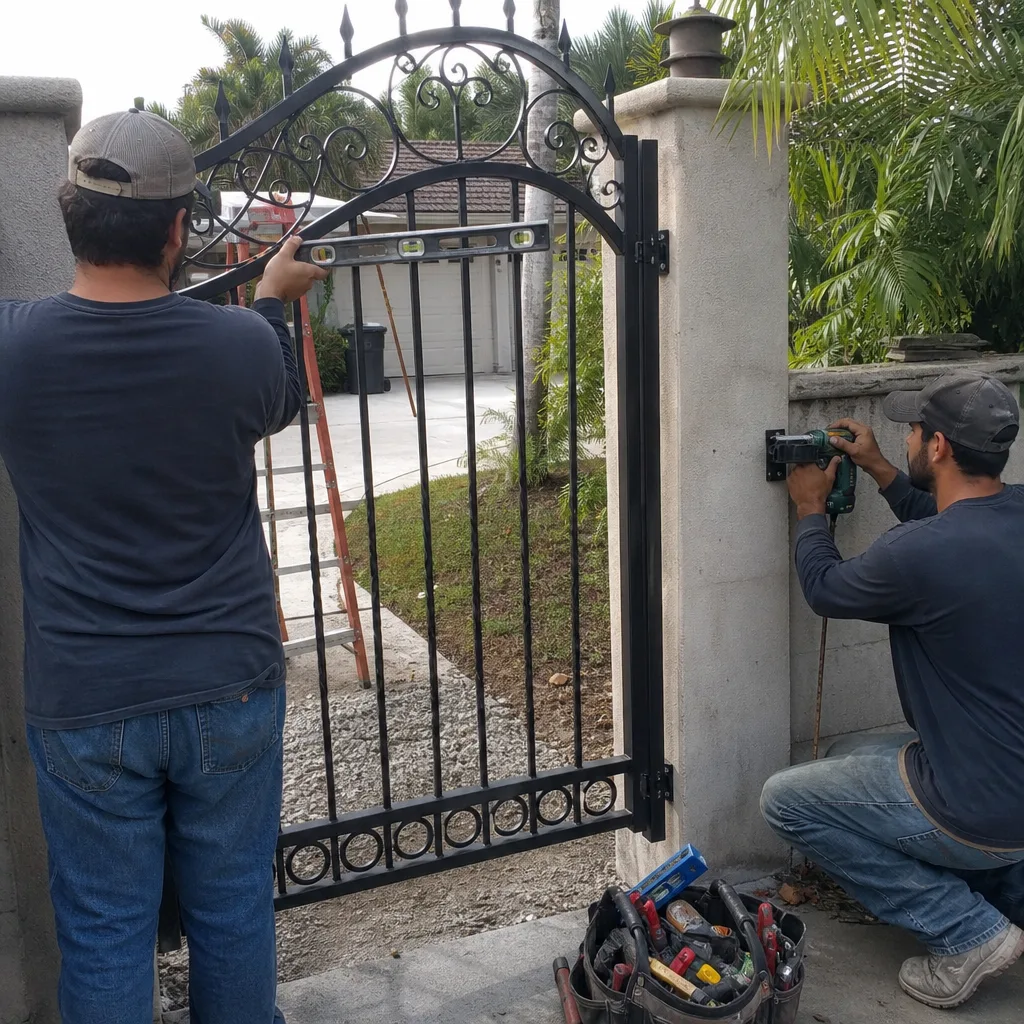
Most homeowners inherit whatever operator came with the house, and the brand wasn’t chosen for the property. Each brand has a few known tendencies in this climate. Knowing yours means you know what to watch for.
LiftMaster swing-gate arms sold in Florida typically ship with sealed gear boxes, which is good, but the wiring harnesses use spade connectors that corrode in salt air if the control-box gasket fails. Check the gasket seal every March, especially if the box is mounted on a south-facing wall where sun exposure degrades rubber gaskets faster.
FAAC hydraulic operators are well-suited to high-cycle residential gates, but the hydraulic fluid degrades in sustained heat. A Faac arm that runs hot to the touch after a typical open-close cycle in August may be telling you the fluid is old. Flush and refill at the manufacturer-specified interval, and if you don’t know when it was last done, get it checked before hurricane season.
Mighty Mule openers are common on lighter residential gates, and they’re sensitive to battery condition. The batteries in these units are not designed to sit in standing water, and West Palm Beach storm drainage can leave operators sitting in several inches of runoff. Elevate the battery box at installation and check for water staining on the housing after any heavy rain event.
BFT slide-gate operators are built for heavier gates, and the rack-and-pinion drives on these units need regular cleaning more than most. Caked-on dirt and salt residue on the rack acts like sandpaper against the pinion gear. Wipe the rack clean during your March service and again after any dust-heavy dry-season stretch.
Our Gate Motor & Opener in West Palm Beach service covers all of these brands and several more, because the right answer is almost always to fix the operator you have, not to replace it with one we happen to prefer. A written price, handed to you before work starts, applies regardless of brand.
Common Mistakes to Avoid
- Lubricating hinge pins without cleaning them first. New grease over old, grit-filled grease just traps the grit against the pin and accelerates wear. Wipe first, then grease. In this humidity, the old stuff holds salt and metal particles.
- Ignoring a slow gate. If the gate takes noticeably longer to open or close than it did six months ago, the operator is working harder than it should. “Still works” is not the same as “working right.” The slow phase is the warning phase.
- Treating hurricane prep as a one-day event. Boarding up windows while ignoring the gate means the gate may fail when you need it most, especially if the storm knocks out municipal power and you need to operate the gate manually.
- Using the wrong lubricant on electrical connections. WD-40 and similar penetrating oils are not contact cleaners. They leave residue that attracts dust and can compromise the connection over time. Use an electronics-grade cleaner or just a dry cloth.
- Not photographing the limit switches when the gate is healthy. Without a baseline, you can’t tell if the switch has drifted. You can only tell that the gate is misbehaving, which is a much later and more expensive discovery.
- Waiting until the gate won’t open to call someone. By the time the gate has completely failed, the repair is almost always bigger and more expensive than it would have been at the first sign of trouble. Early intervention is the cheapest word in gate maintenance.
- Assuming the operator brand determines compatibility. A LiftMaster can be replaced with a FAAC or a BFT unit if the gate geometry and weight match. Don’t let a single-brand shop convince you that replacement means the same brand. The gate doesn’t care what name is on the arm.
When to Call a Professional
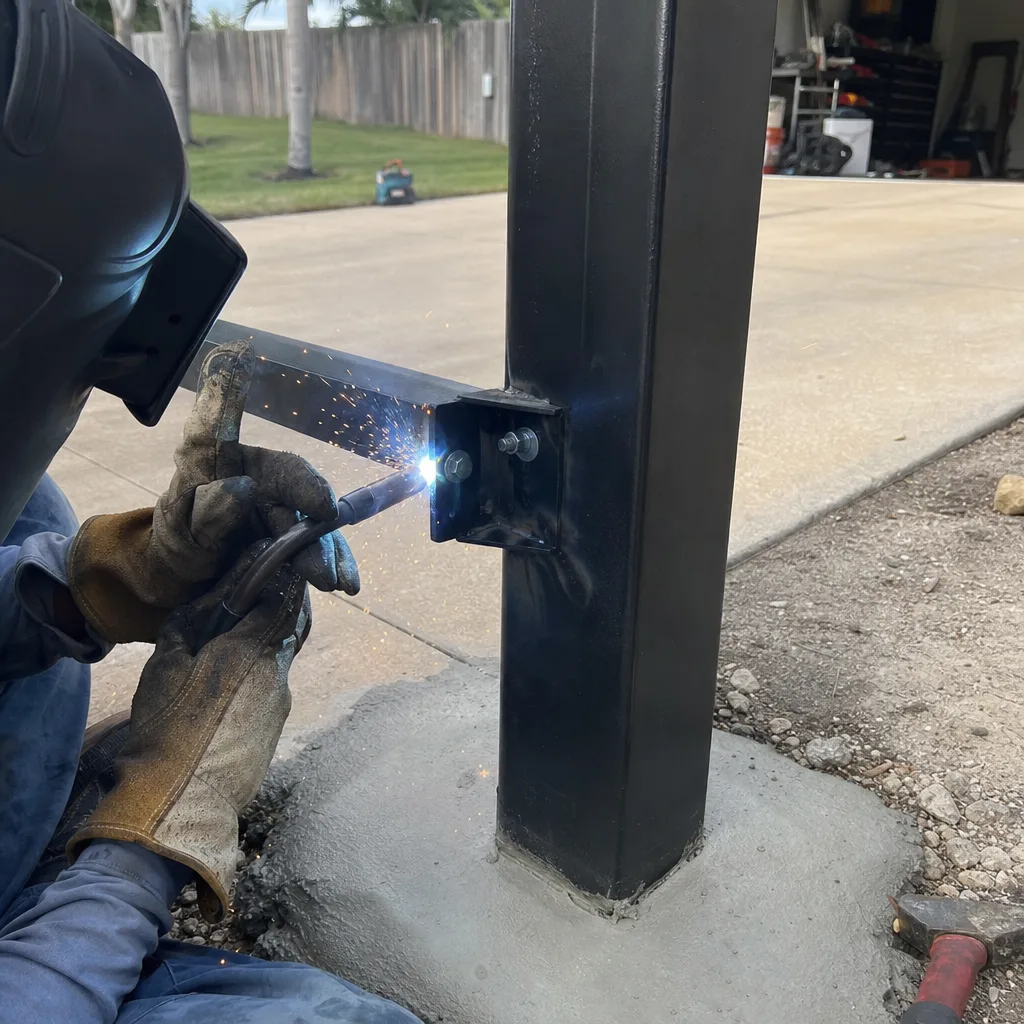
Some maintenance tasks are owner-appropriate. Others are not. If the gate feels heavy after lubrication, the hinge pin itself may be worn. If the operator hums but the gate doesn’t move, the problem could be electrical, mechanical, or both. If you see burn marks on a control board, stop using the gate immediately. If the gate has taken storm damage and the frame is visibly out of square, the entire installation needs professional assessment before the operator is run again. These are not DIY conditions. Vance Gate Repair West Palm Beach offers free estimates in West Palm Beach. Call (561) 725-8048 and a technician will come out, write a price, and hand it to you before any work starts.
Frequently Asked Questions
A basic lubrication and inspection service in West Palm Beach typically runs between $85 and $175 depending on gate size, type, and number of hinges or rollers. Repairs found during maintenance, like a worn hinge pin or a drifted limit switch, add cost on top, but you’ll get a written price before any repair work begins. Call (561) 725-8048 for a exact quote on your specific gate.
Hinge and roller wear is the most common gate repair in West Palm Beach. The salt air and humidity shorten the life of lubricants, and once the lubricant fails, the metal-on-metal contact destroys the hinge pin or roller bearing faster than in drier climates. Operator failures, gear damage, and burned-out capacitors are frequently the secondary result of a hinge that went too long without attention.
You can perform basic maintenance: cleaning, lubricating, photographing, and logging what you see. If you find resistance that won’t clear with lubrication, a connection point that’s already corroded, or electrical symptoms like humming without movement, call a professional. The hands-on work on electrical components is for a trained technician, not a maintenance checklist.
Service your gate every 90 days for lubrication and visual inspection, with a complete full inspection in March and another in May before hurricane season. After any named storm passes within 50 miles, inspect again. The coastal environment in West Palm Beach makes twice-a-year minimum professional inspections worth the cost relative to the price of operator replacement.
With proper hinge maintenance and seasonal attention, a quality operator in West Palm Beach lasts 8 to 12 years. Without it, we’ve replaced operators at 4 and 5 years old. The difference is rarely the brand. It’s the maintenance.
Yes. A live person answers the phone 24/7, and we dispatch technicians across West Palm Beach every weekday. Weather or high call volume can occasionally push scheduling to the next morning, but you will always speak to a person, not a voicemail loop, and your price is written before any work begins. Call (561) 725-8048.
The Bottom Line
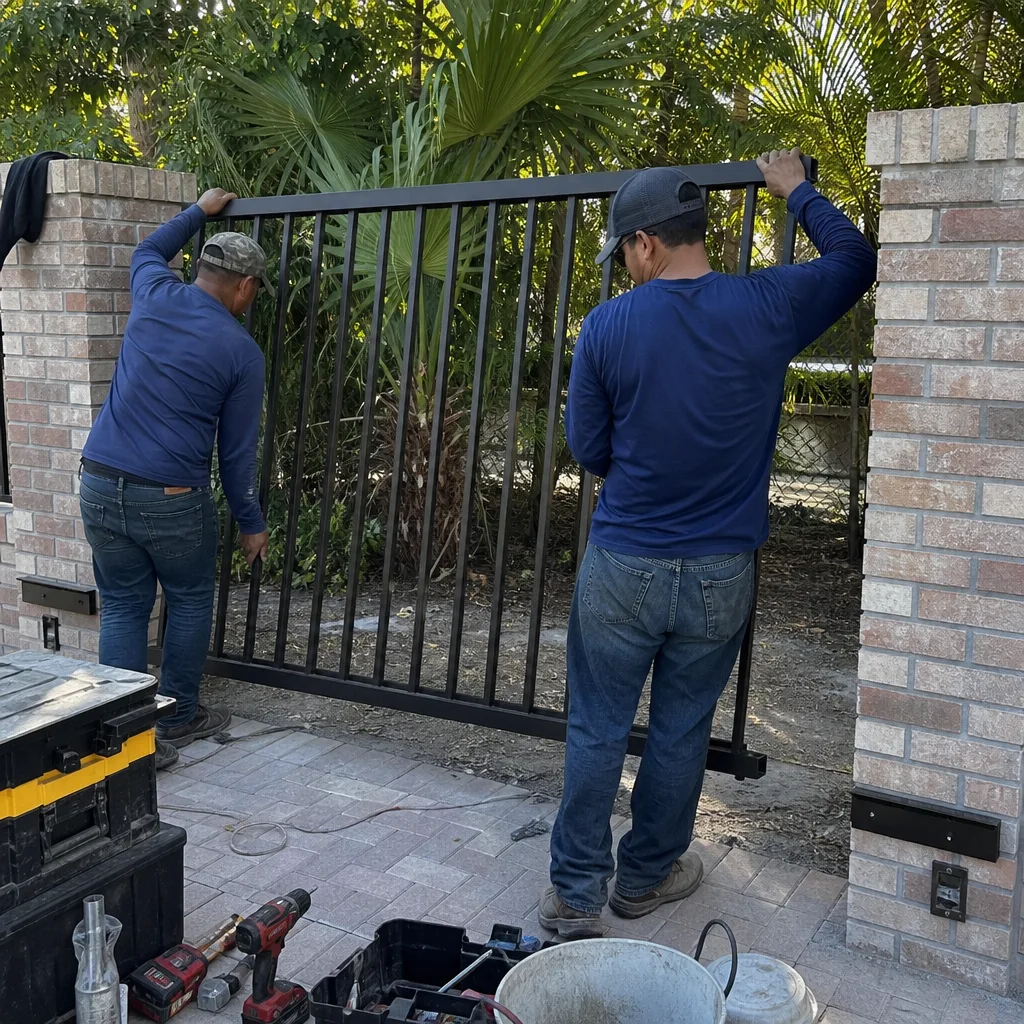
West Palm Beach is hard on gates in ways that inland Florida is not. The salt air concentrates corrosion at electrical connection points. The humidity destroys lubricants. The hurricane season creates sudden impact loads that knock limit switches out of alignment and stress hinges past their design tolerance. A maintenance checklist that treats this environment as generic will fail early. The one in this guide is built around the specific failure patterns we document in this city, and the thresholds are measurable: two-finger hinge pressure, baseline limit-switch photos, a March service, a May inspection, a post-storm check. Do these things and your gate will last years longer. Skip them and the operator will fail in front of you, probably in August.
Written by Adrian Vance, Owner at Vance Gate Repair West Palm Beach, serving West Palm Beach since 2014. For more guides & resources, visit our blog.