
Last updated September 20, 2026
Free on-site gate assessment - hinges, posts, and your LiftMaster or Nice gate operator checked before anything is quoted
The assessment is free and the quote is the invoice.
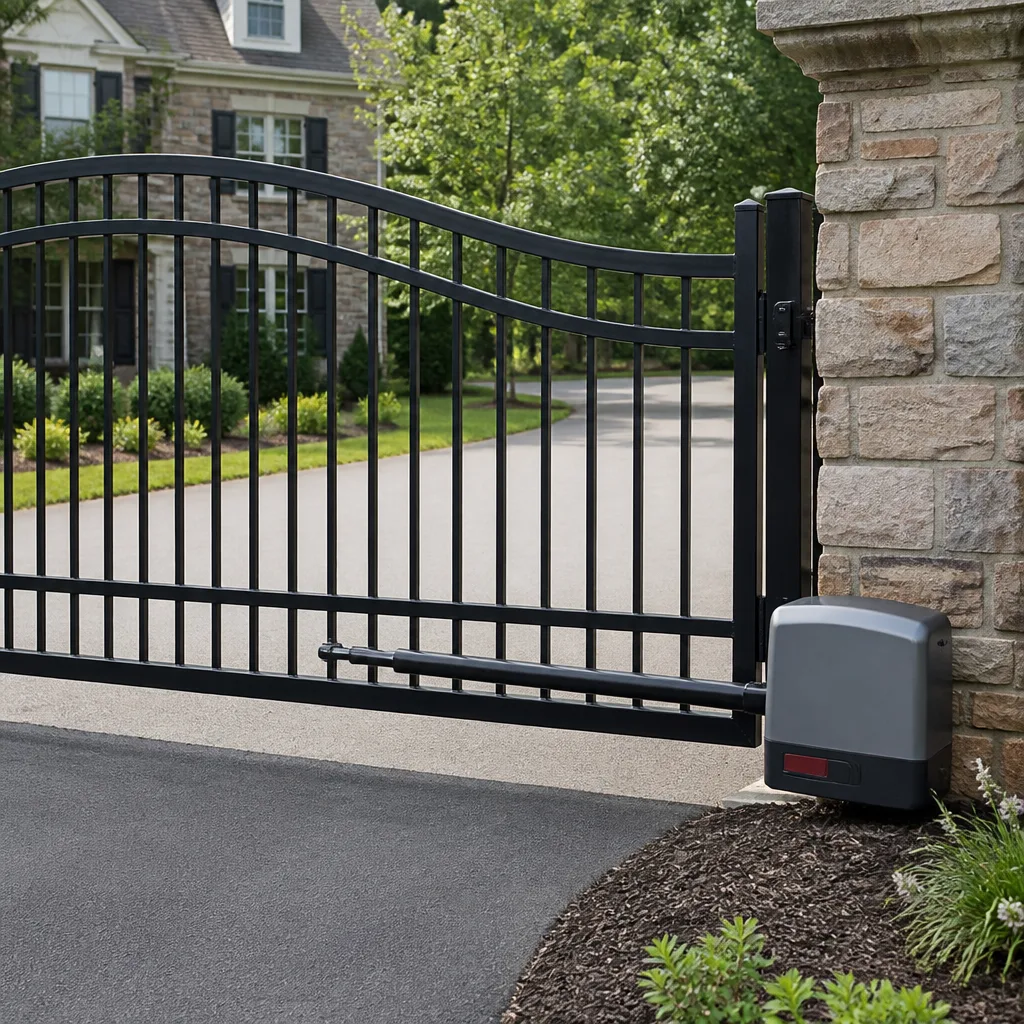
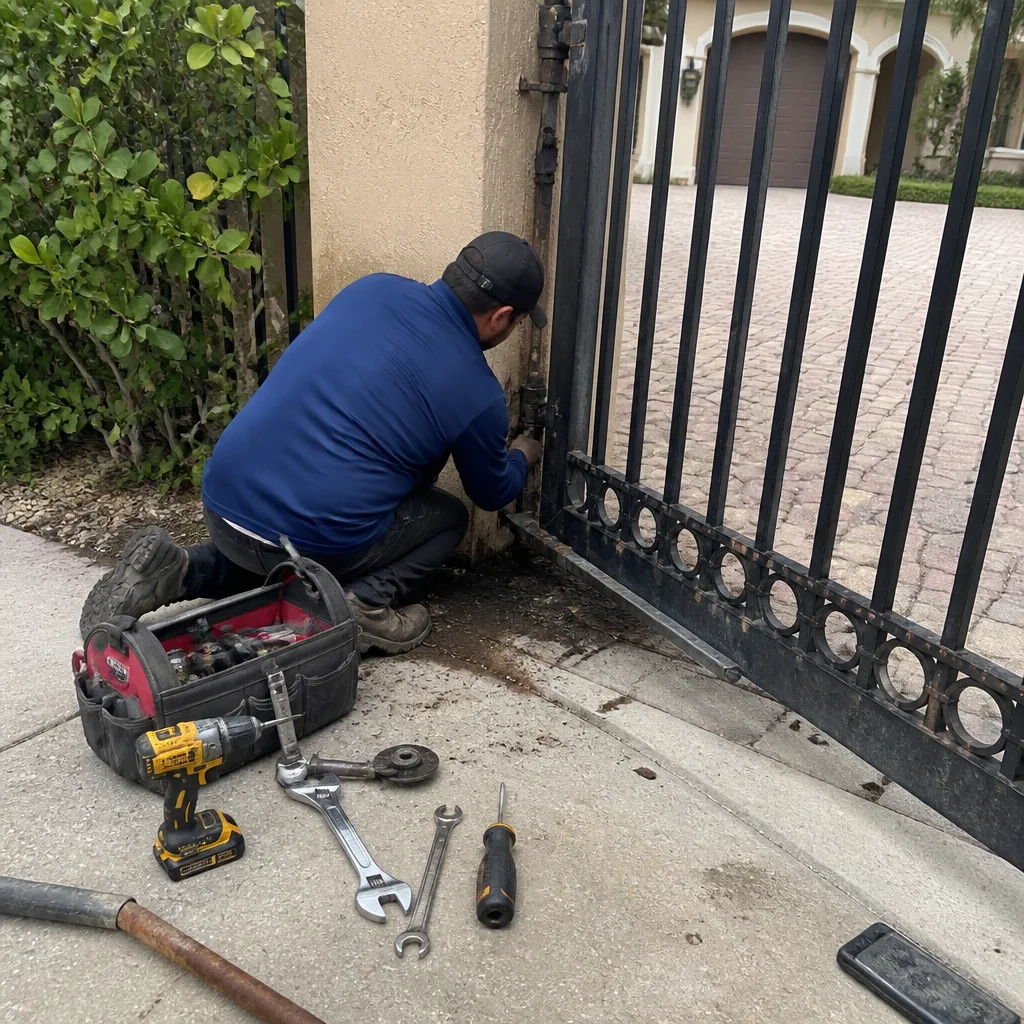 Before
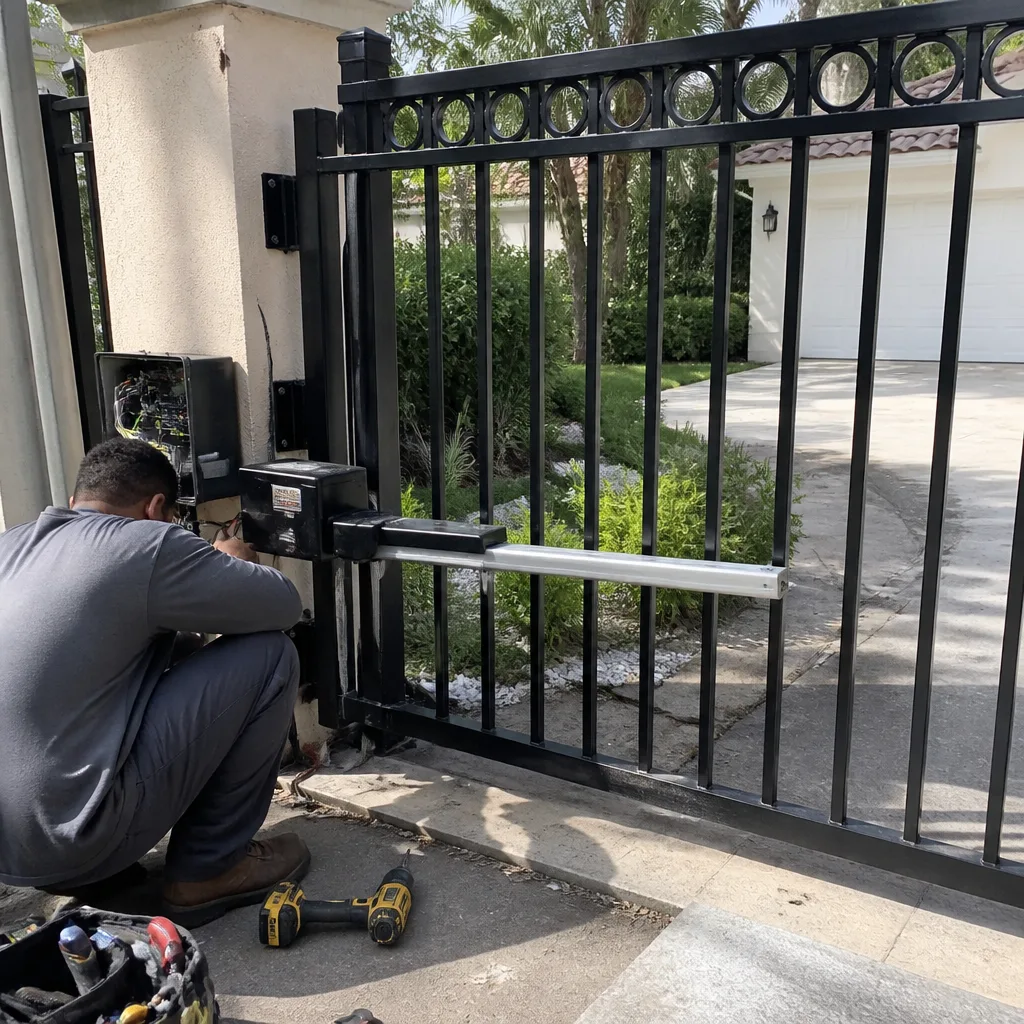 After
After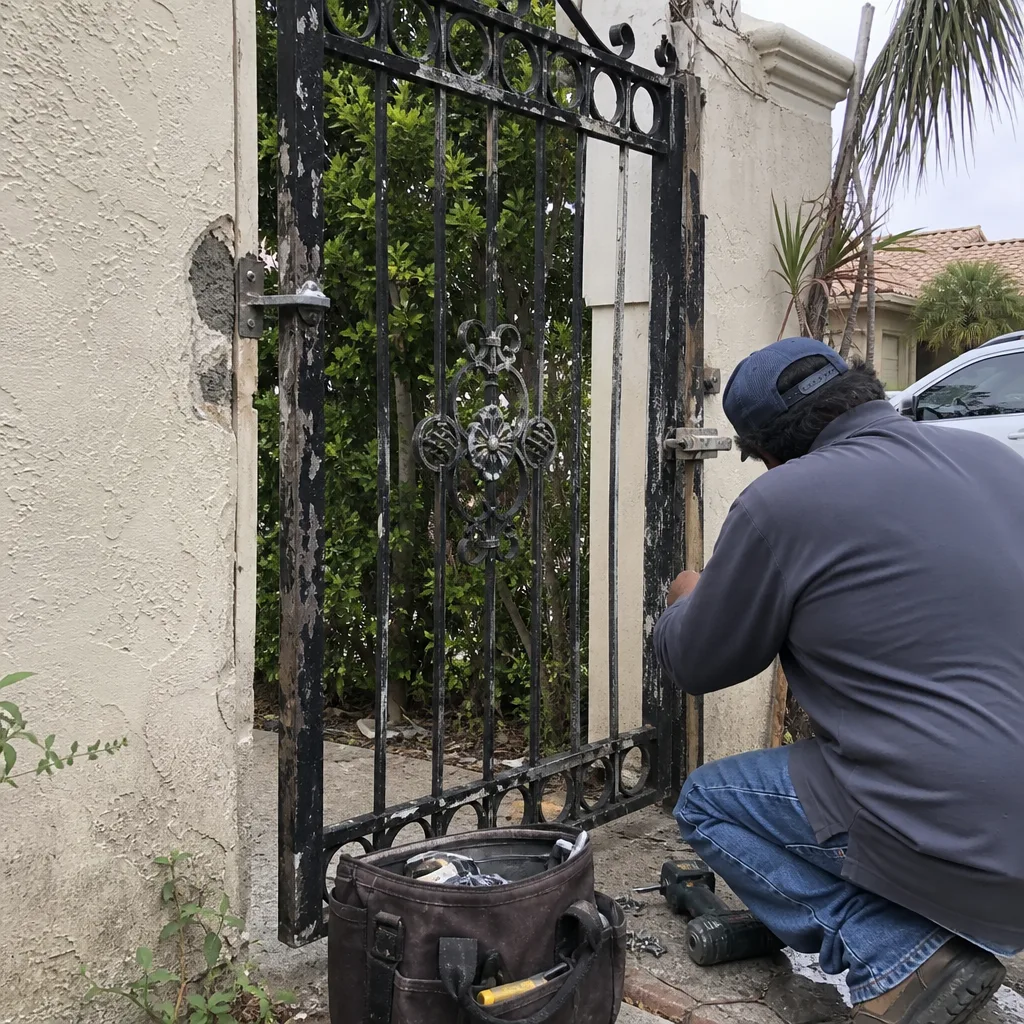 Before
 After
After Before
 After
AfterGate Repair Warning Signs: A West Palm Beach Homeowner’s Reference Guide
A gate that pauses for two seconds before moving has already entered the failure sequence. That pause is the operator’s overcurrent protection tripping, and it trips faster each time. Most West Palm Beach homeowners replace a gate motor only after it dies completely, but the motor announced its death weeks earlier through sounds and hesitations that were written off as normal wear. This guide names each warning sign, identifies the component doing the talking, and gives you the timeline between first symptom and full failure so you can schedule Gate Repair services instead of an emergency call.
Quick Answer
The clearest gate repair warning signs are a gate that hesitates before moving, grinding or squealing during travel, a gate that reverses direction unexpectedly, physical sagging or tilting, rust bleeding through paint at welds, sluggish operation in cold weather, and a control board showing visible corrosion or swelling. If you notice a hesitation lasting more than one full second, or a sound you can hear from inside your car, the failure sequence has already started, and in high-use residential settings in West Palm Beach, the average window between first noticed pause and complete stoppage is eleven to nineteen days.
Table of Contents
- Sound Diagnostics: What Your Gate Is Telling You
- The Hesitation-to-Failure Timeline
- Visual Indicators on the Control Board
- Battery Backup Failure vs. Operator Failure
- Physical Structure: Hinges, Welds, and the Sag You Shouldn’t Ignore
- The Two-Minute Weekly Observation Routine
- What West Palm Beach Climate Does to Gate Components
- Common Mistakes to Avoid
- When to Call a Professional
- Frequently Asked Questions
- The Bottom Line
BeforeAfterSound Diagnostics: What Your Gate Is Telling You
Every moving part on a gate makes a specific sound when it starts to fail. Homeowners in West Palm Beach often describe these sounds vaguely, a “grinding” or a “groaning,” but a technician can usually identify the failing component from the sound alone. Here is what each sound indicates.
A failing capacitor in the motor’s start circuit makes a rapid clicking sound, like a pen tapping on a desk, when the gate is commanded to move but the motor cannot get enough starting torque. This is often mistaken for a relay problem, but the clicking pattern is distinctive: three to five rapid clicks, then silence, then the gate either moves slowly or does not move at all. A worn drive gear makes a rhythmic grinding that matches the speed of the gate’s travel, louder at the start of travel and evening out as the gate picks up momentum. It sounds mechanical because it is: the gear teeth are no longer meshing cleanly, and every rotation shaves a little more metal off the gear face.
A binding hinge produces a creaking or squealing sound that rises in pitch as the gate moves through one specific section of its arc, not evenly across the entire travel. If you hear a squeal that comes and goes at the same physical point every time the gate opens, the hinge at that point has lost lubrication and is wearing against its pin. In West Palm Beach’s salt-adjacent air, this is the most common sound we hear on iron gates within three miles of the Intracoastal. The chain on a slide gate makes a slapping or rattling sound when it has stretched beyond tension spec; a taut chain is nearly silent, a stretched chain sounds like a loose bicycle chain at speed.
What a homeowner should do with a sound is record it. A ten-second phone video of the gate moving, with the microphone pointed at the motor housing or the hinge in question, gives a technician far more diagnostic information than any verbal description. Every visit from Gate Repair in West Palm Beach includes a documented record of what was heard, what was measured, and what was found, but a pre-visit recording often lets us bring the right part on the first trip.
The Hesitation-to-Failure Timeline
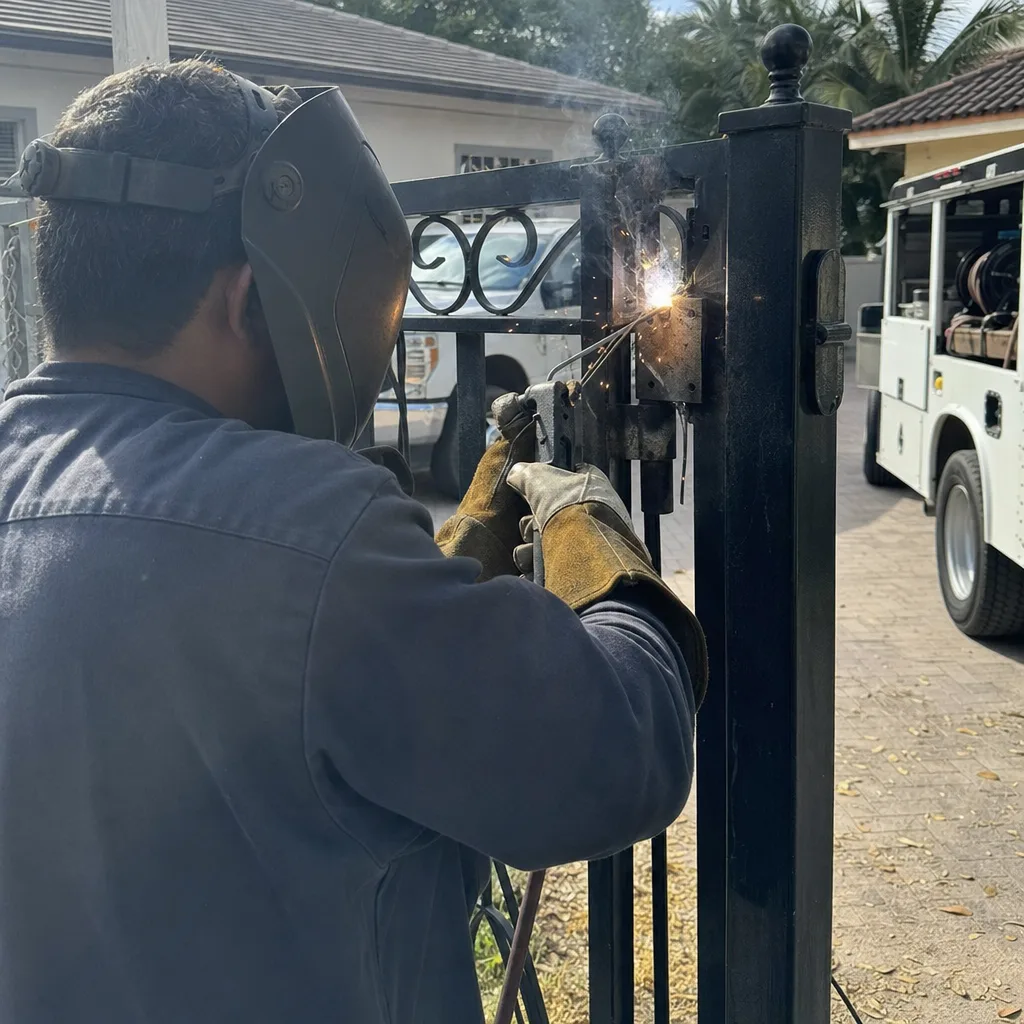
The most overlooked warning sign of all is the pause. A gate that sits for half a second after the remote is pressed, or a gate that stops for a beat and then jerks forward, is not being sluggish. It is tripping a protective circuit and resetting.
Here is the sequence as we see it repeatedly across West Palm Beach residential installations. The pattern holds across LiftMaster, Elite, and DoorKing operators because the protection logic is similar across brands.
- Days 1 to 4: The gate hesitates for roughly one second before moving. The homeowner notices it but attributes it to the remote battery, the heat, or the gate being “old.” The motor’s thermal or overcurrent sensor is tripping and auto-resetting.
- Days 5 to 9: The hesitation lengthens to two to three seconds. The gate may start moving, stop briefly, and start again. The operator is now tripping protection repeatedly within a single open cycle.
- Days 10 to 15: The gate intermittently refuses to move at all on the first command. A second or third press of the remote gets it moving. The homeowner assumes the issue is the remote transmitter, when the operator is actually failing to produce enough starting torque.
- Days 16 to 21: The gate stops mid-travel and reverses to the closed position, or stops dead and stays stopped until power is cycled. Full failure is now days away, not weeks.
- Day 22 and beyond: The gate is dead. The repair that would have been a capacitor or limit switch replacement is now a full motor replacement, often with damage to the drive gear from repeated stall events.
This timeline assumes a high-use residential gate, meaning twenty or more open-close cycles per day, which is common in West Palm Beach neighborhoods like El Cid, Flamingo Park, and the communities along Southern Boulevard where gates see constant traffic. In lower-use settings the window stretches to four or six weeks, but the sequence of symptoms is identical. The takeaway: a hesitation is never nothing, and the cheapest day to fix it is the first day you notice it.
Visual Indicators on the Control Board
The control board is the gate’s brain, and like most brains, it telegraphs its condition through physical signs long before it stops functioning. Homeowners can photograph these signs and send them to a technician before scheduling service, which often allows for a same-trip repair rather than a diagnostic visit followed by a parts-ordered visit.
Three visual indicators account for the large majority of pre-failure board conditions we document in West Palm Beach.
- Corrosion patterns: Green or white crystalline deposits on the board’s edge connectors, terminal blocks, or the bases of relays. In coastal West Palm Beach air, salt and humidity combine to corrode exposed copper traces. A board with corrosion at the terminal strip may still function, but the resistance at those terminals is climbing, and the board will eventually misread sensor signals.
- Burn marks: Brown or tan discoloration around a relay, a cracked transistor, or a darkened area of the board under a power resistor. Burn marks indicate a component has been running hot, usually because the gate’s motor is drawing more current than the board was designed to supply continuously. A burn mark does not mean the board is dead; it means the board is being asked to do more work than it should.
- Swollen capacitors: The small cylinder-shaped components on the board should have perfectly flat tops. A capacitor that is bulging upward, leaking brown fluid, or has a split in the top casing is failing or already failed. On Gate opener control boards from LiftMaster and DoorKing, we most often see swollen capacitors in the power supply section after voltage surges, which are common during West Palm Beach summer lightning season.
If any of these conditions are visible, photograph them before touching anything. A clear photo of the board, with the power to the operator switched off at the breaker first, tells us whether we need a board-level repair or a board replacement before we arrive. This is the same photographic documentation habit we bring to every job: you get a photo log of what was found and what was changed, matching the evidence standard behind Vance Gate Repair West Palm Beach home service calls.
Battery Backup Failure vs. Operator Failure
During a power outage in West Palm Beach, a gate that will not open is either a dead battery backup or a dead operator, and the repair cost difference between the two is significant. A battery replacement on most residential operators is a two-to-four-hundred-dollar service. An operator replacement can run fifteen hundred to three thousand depending on the brand and configuration. Here is how to tell the difference before calling.
- Test with utility power on. If the gate opens normally when the house has power, the operator and its motor are functional. The problem is isolated to the battery circuit or the charging circuit.
- Check the battery’s age. Gate batteries are built to last two to five years in the Florida climate. If the battery is original to an operator that is six years old, it has been dead for a year or more and was only maintaining a surface charge.
- Listen during an outage. A gate with a healthy battery responds to a command during an outage with a slightly slower travel but no hesitation. A gate with a failing battery either does not respond at all, or it inches forward, stops, and resets.
- Look at the battery itself if you can access it safely. A battery with a bulging case, a white crust around the terminals, or a date sticker older than four years is the culprit in almost every power-loss scenario we see in West Palm Beach.
If the gate has never opened during an outage despite the battery being present, the charging circuit on the control board may have failed, or the battery may have never been connected correctly by the original installer. A technician can meter the battery in place and tell you within minutes whether you are paying for a battery or a board. For full detail on what an operator replacement actually includes, see Gate Motor & Opener in West Palm Beach.
Physical Structure: Hinges, Welds, and the Sag You Shouldn’t Ignore
Sound and hesitation are the early warnings from the motor and controls. The gate’s physical frame gives its own warnings, and they are easier to see than to hear.
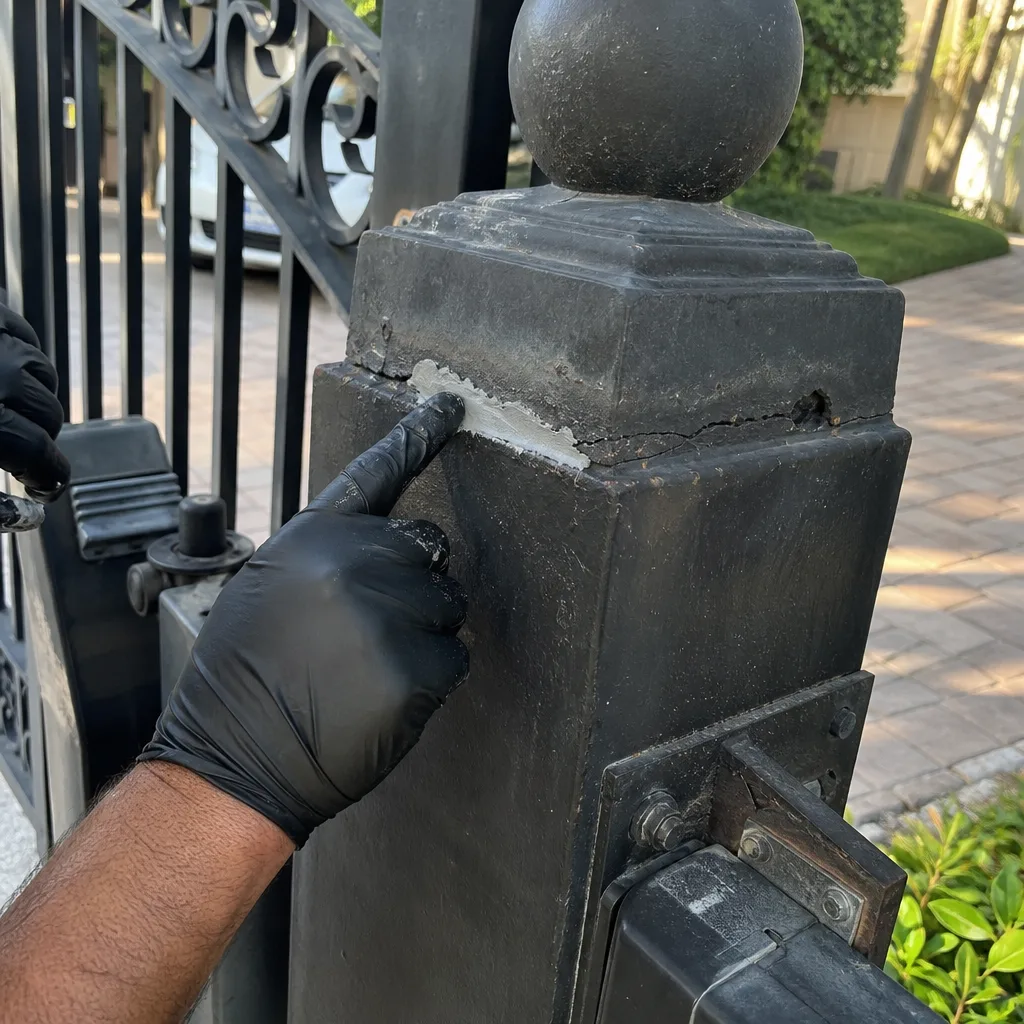
A swing gate that sags is the most common structural failure in West Palm Beach, where the combination of high humidity, salt air, and soft sandy soil works on hinge posts year-round. The sag is visible before it is measurable: the gate’s free end drops below the latch post, the gate drags a diagonal line in the grass or gravel at the outermost edge of its arc, or the gap between the gate and the driveway grows wider at the bottom than at the top. A sagging gate is not a cosmetic problem. A gate that sags is levering its hinge welds with every open and close cycle, and a weld that fails under load sends several hundred pounds of steel swinging free.
Rust bleeding through paint is another signal. A pinhead-sized brown spot where the paint looks raised or blistered means the steel underneath is oxidizing, and the oxidation is expanding. In West Palm Beach, where salt air within a few miles of the coast accelerates the process, a small paint blister on a steel gate post can become a structural thinning within eighteen months. The time to address it is when it is still a surface repair, not when the post wall is down to a fraction of its original thickness.
For slide gates, watch the track and the rollers. A slide gate that shudders as it travels, or that rides up on one roller at a specific point, is telling you that a roller has worn flat or a track section has settled out of alignment. The gate is still moving, so the problem is easy to ignore. But a flat roller carves a flat spot into the track with every cycle, and when the track wears through, the repair is no longer a roller swap. It is a track section replacement and a gate re-alignment.
If the sag, rust, or track wear is significant, the fix may fall under structural repair or full replacement rather than a motor service. Either way, the price should be in writing before the work starts. Our Gate Installation in West Palm Beach service begins with measurements and a written scope, never a verbal number.
The Two-Minute Weekly Observation Routine
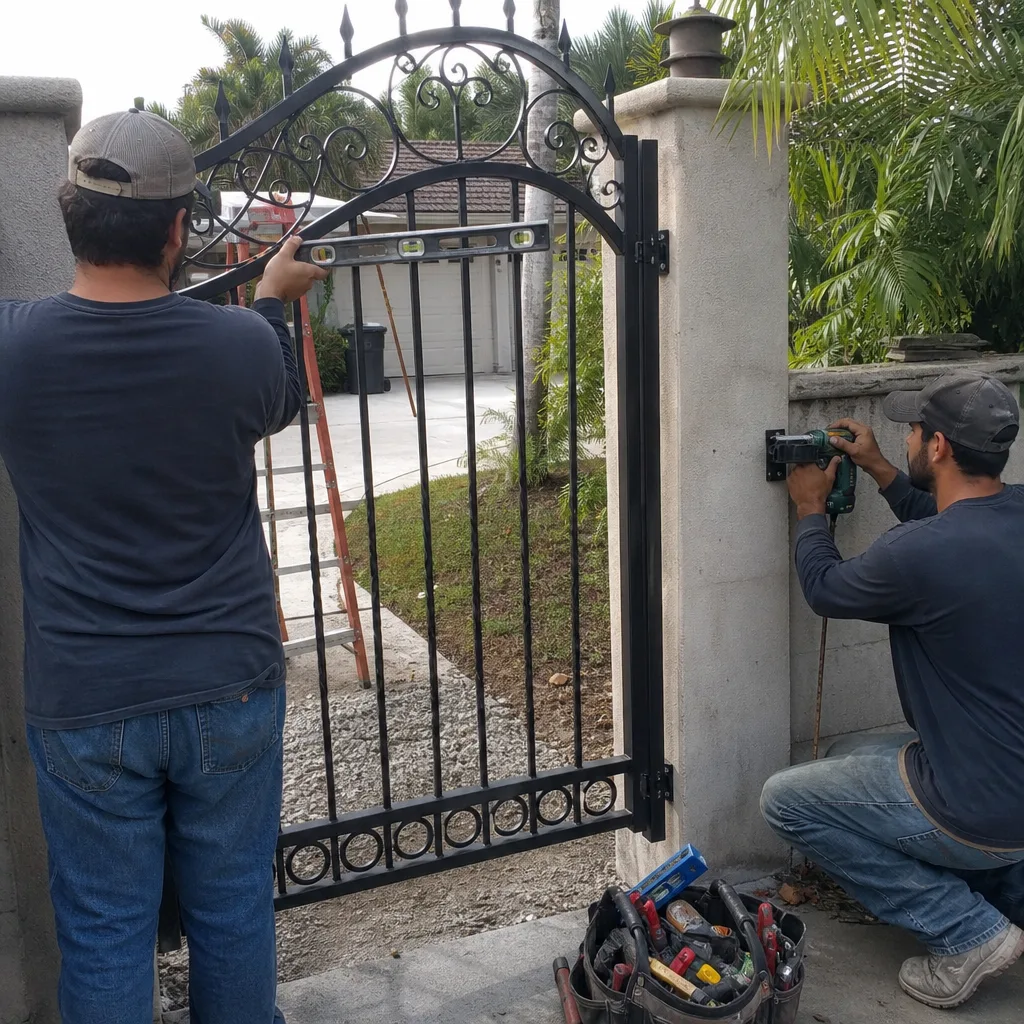
Most gate failures are caught too late because nobody is watching for them. A two-minute observation routine, done once a week, catches roughly eight out of ten failures before they become emergencies, and it costs nothing.
Here is the routine, in order.
- Listen to one full open-close cycle. Stand at the gate, not inside the house. Your ears are closer to the motor. A smooth and even sound with no rhythm that changes through the travel is what you want. Any clicking, grinding, squealing, or a sound that rises and falls at the same physical point each cycle gets recorded on your phone.
- Watch the start of travel. Press the remote and count the seconds before the gate actually begins to move. Anything longer than one second is a protection circuit tripping and resetting. Log it. If you notice it twice in one week, call a technician before the third week.
- Look at the gate in the closed position from twenty feet back. Check whether the gate’s top edge is level with the top of the fence or column. A gate that slopes, even slightly, is sagging.
- Look at the gate in the open position from the same distance. Check whether the gate sits where it always sat, or whether it has drifted closer to the ground or further away from the stop post.
- Walk to the motor housing. Look at the ground beneath the operator. Oil spots, a fine dusting of brown or black powder, or a small pile of metal shavings under the motor or gearbox are signs of internal wear that is already advanced.
- Check for new rust spots on the gate and posts. New rust has a bright orange color under the paint. Old rust is dark brown. Bright orange is active and spreading.
This routine is designed to be done while the sprinklers run or while the dog sniffs the fence line, and it is the single most effective thing a West Palm Beach homeowner can do to avoid an emergency gate call. In our experience, gates that are observed weekly fail inexpensively. Gates that are ignored until they stop fail expensively.
What West Palm Beach Climate Does to Gate Components
West Palm Beach is harder on gate hardware than almost any other market in the continental United States, and the damage follows predictable patterns.
Humidity is the first enemy. The annual average relative humidity in West Palm Beach runs above seventy percent, and the interior of a gate motor housing, which cycles between hot and cool as the motor runs and rests, pulls moisture in through the same vents that are supposed to release heat. That moisture condenses on the control board, the terminals, and the motor windings. Over years, it corrodes the board’s solder joints and terminal strip, exactly the corrosion patterns described above. This is why boards fail more often in West Palm Beach than they do in Phoenix or Las Vegas with the same number of cycles.
Salt air is the second enemy, and it is concentrated in a band roughly three miles wide along the coast and the Intracoastal. Homeowners in Northwood, Old Northwood, and the communities along Flagler Drive see faster hinge wear, faster rust on steel posts, and faster corrosion on exposed electrical connections than homeowners further inland. A steel gate in coastal West Palm Beach that is not inspected and re-coated on a schedule will show structural rust within five to eight years regardless of the original paint quality.
Lightning is the third enemy, and it is seasonal. The summer thunderstorm pattern across South Florida produces frequent voltage surges on the grid, and a surge that does not kill a control board immediately can still degrade the board’s capacitors and power supply circuitry. A homeowner who notices that their gate began hesitating or behaving erratically immediately after an electrical storm should assume the surge weakened the board, not that the operator coincidentally developed a mechanical problem the same week.
None of these climate factors can be eliminated, but all of them can be monitored. The weekly observation routine above was designed for West Palm Beach conditions, not for the national average, and it remains the cheapest form of gate insurance available.
Common Mistakes to Avoid
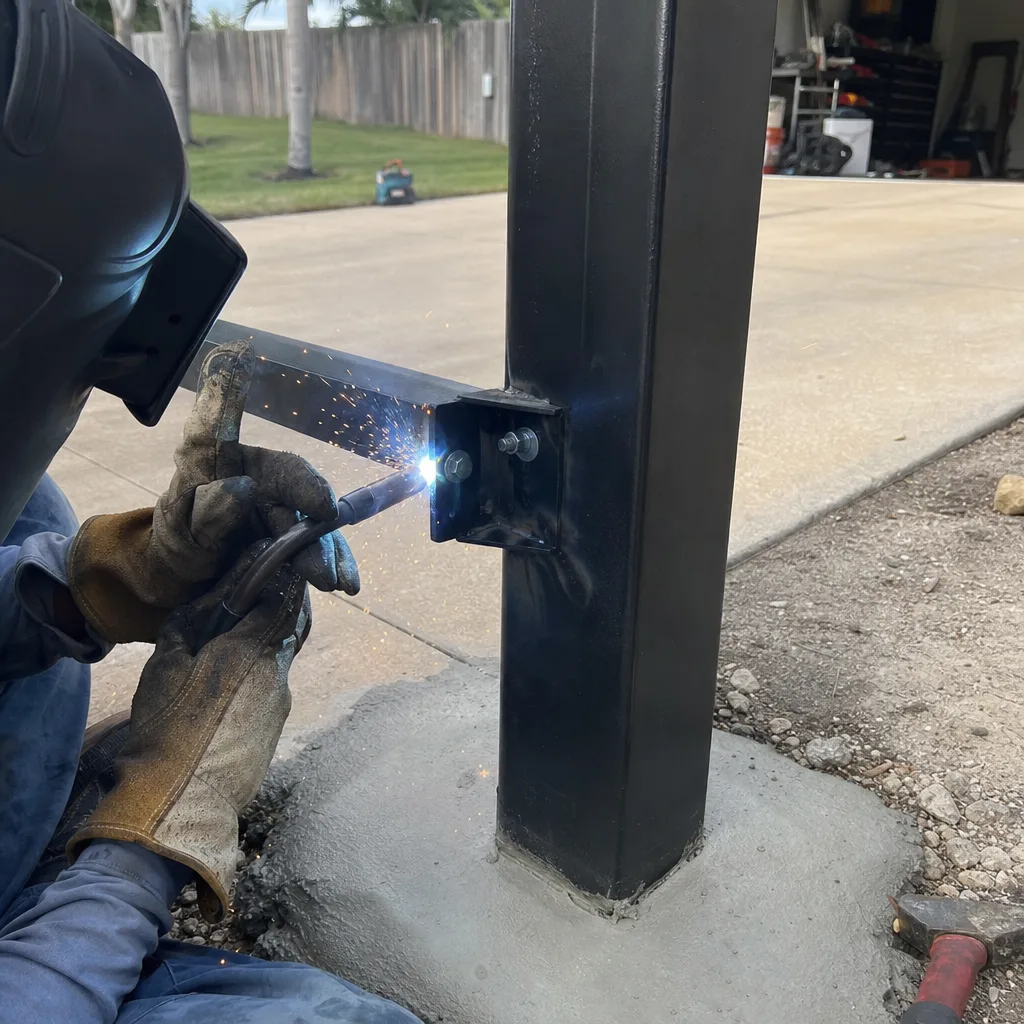
- Lubricating a failing hinge and calling it fixed. Lubricant quiets a squealing hinge for a few weeks, but a hinge that is already worn beyond its tolerance continues to wear even while lubricated. The silence is a mask, not a repair. In West Palm Beach’s salt air, we see this mistake turn a forty-dollar hinge pin replacement into a four-hundred-dollar weld repair.
- Replacing the remote battery to fix a gate that hesitates. A hesitation is almost never the remote battery. If the remote’s LED lights up when pressed, the transmitter is sending. A hesitant gate is a protection circuit tripping, and a new battery in the remote does not change the condition on the board.
- Powering through a gate that is dragging. A modern gate operator will trip its overcurrent protection rather than destroy itself, but older operators and some budget brands will keep pushing current into a stalled motor until the motor or capacitor fails. If the gate is dragging across the ground, the drag is the problem, not the motor, and the motor is being sacrificed to it.
- Ignoring the pause because the gate “still works.” The gate always “still works” right up until it doesn’t. The pause is the warning, and every day the fix gets more expensive.
- Testing the battery backup for the first time during a hurricane warning. A power outage from a summer storm or a hurricane is precisely when a battery backup earns its place, but a five-year-old battery will not hold its first real load on the day the power goes out. Test the backup monthly by cutting the breaker to the gate and cycling it once.
When to Call a Professional
Some gate problems are obvious and safe to inspect visually. Anything beyond visual inspection, meaning anything involving a motor housing opened while powered, a spring or counterweight under tension, or a gate that has come off its track, belongs to a trained technician. A swing gate that has torn free of a hinge weld is storing energy in the remaining structure, and the wrong touch can release it. A slide gate that has jumped its track can fall sideways, and several hundred pounds of steel does not forgive a hand in the wrong spot. High-voltage wiring inside an operator housing should never be touched with the power on, and some capacitor values hold a charge even after power is removed. If you notice any warning sign in this guide and do not have direct experience working on gate automation, the safe move is to record the symptom and make the call. For help choosing a qualified professional, read our How to Hire a Gate Repair Contractor in West Palm Beach: A Step-by-Step Guide. Vance Gate Repair West Palm Beach offers free estimates in West Palm Beach, and a written price before any work starts. Call (561) 725-8048 and a real person answers.
Frequently Asked Questions
Most common gate repairs in West Palm Beach run between $180 and $650, with motor replacements on the higher end and small part replacements like capacitors, limit switches, and photo-eyes on the lower end. A full operator replacement typically runs $1,500 to $3,000 depending on the brand, the gate’s weight, and whether the existing arm bracket and mounting hardware can be reused. Every quote from Vance Gate Repair is written and handed to you before the work starts, with no surprise line items at the end. Call (561) 725-8048 for a free estimate on your specific gate.
Most gate repair calls in West Palm Beach can be scheduled same-day or next-day, and a live person answers the phone twenty-four hours a day to set the appointment. The written price is delivered before the first tool is picked up, whether you call at noon or at two in the morning.
A hesitation before travel is the operator’s overcurrent or thermal protection tripping and resetting, which means the motor is drawing more current than the board allows, usually because of a failing capacitor, a worn drive gear, a binding hinge, or a gate that is dragging on its track. The fix costs less in the first week of the symptom than it does in the third, so the hesitation is a schedule-a-repair signal, not a wait-and-see signal.
A grinding noise that matches the gate’s travel speed is almost always a worn drive gear or a chain that has stretched and is slipping on the sprocket. West Palm Beach humidity accelerates the wear by washing lubricant out of the gearbox and by corroding the hardened surfaces of the gear teeth. The repair is a gear or chain replacement, not a full motor replacement, if caught before the worn gear destroys the motor’s output shaft.
Test the gate when utility power is on: if it opens normally, the operator is functional and the problem is the battery or its charging circuit. If the gate hesitates or stalls during normal powered operation, the operator itself has a fault. A technician can meter both in minutes. Call (561) 725-8048 and we can walk you through the test over the phone before dispatching anyone.
A sagging gate should be locked in place or left closed, not cycled repeatedly, because every cycle levers the hinge welds further. Schedule a structural inspection, which is usually a forty-five-minute visit in West Palm Beach to measure the gate’s weight distribution, the hinge post’s plumb, and the condition of the welds. The repair may be a hinge replacement or a post reset rather than a full gate replacement, and the price is written before any work begins.
The Bottom Line
Gates do not fail silently. They hesitate, they grind, they sag, they rust, and every one of those signals maps to a specific component with a specific repair cost and a specific window of time. In West Palm Beach, where humidity, salt air, and lightning conspire against gate hardware, the two-minute weekly observation routine is the difference between a $250 capacitor and a $2,500 operator. Watch the gate. Listen to it. Record what you find. For more guides & resources, explore our blog. And when the signal shows up, call (561) 725-8048 for a written price and a documented repair, because a gate that announces its failure deserves to be fixed before it finishes announcing it.
Written by Adrian Vance, Owner at Vance Gate Repair West Palm Beach, serving West Palm Beach since 2014.