
Last updated September 20, 2026
Free on-site gate assessment - hinges, posts, and your LiftMaster or Nice gate operator checked before anything is quoted
The assessment is free and the quote is the invoice.

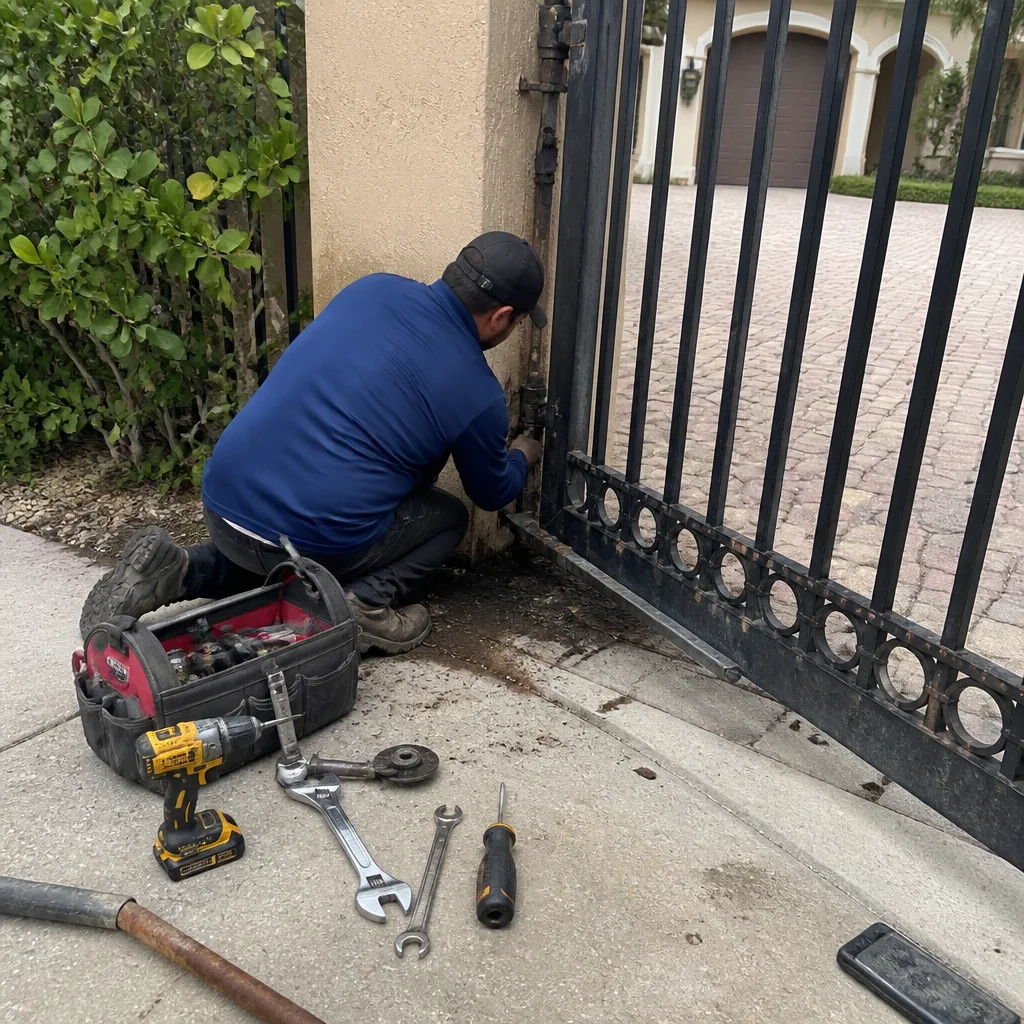 Before
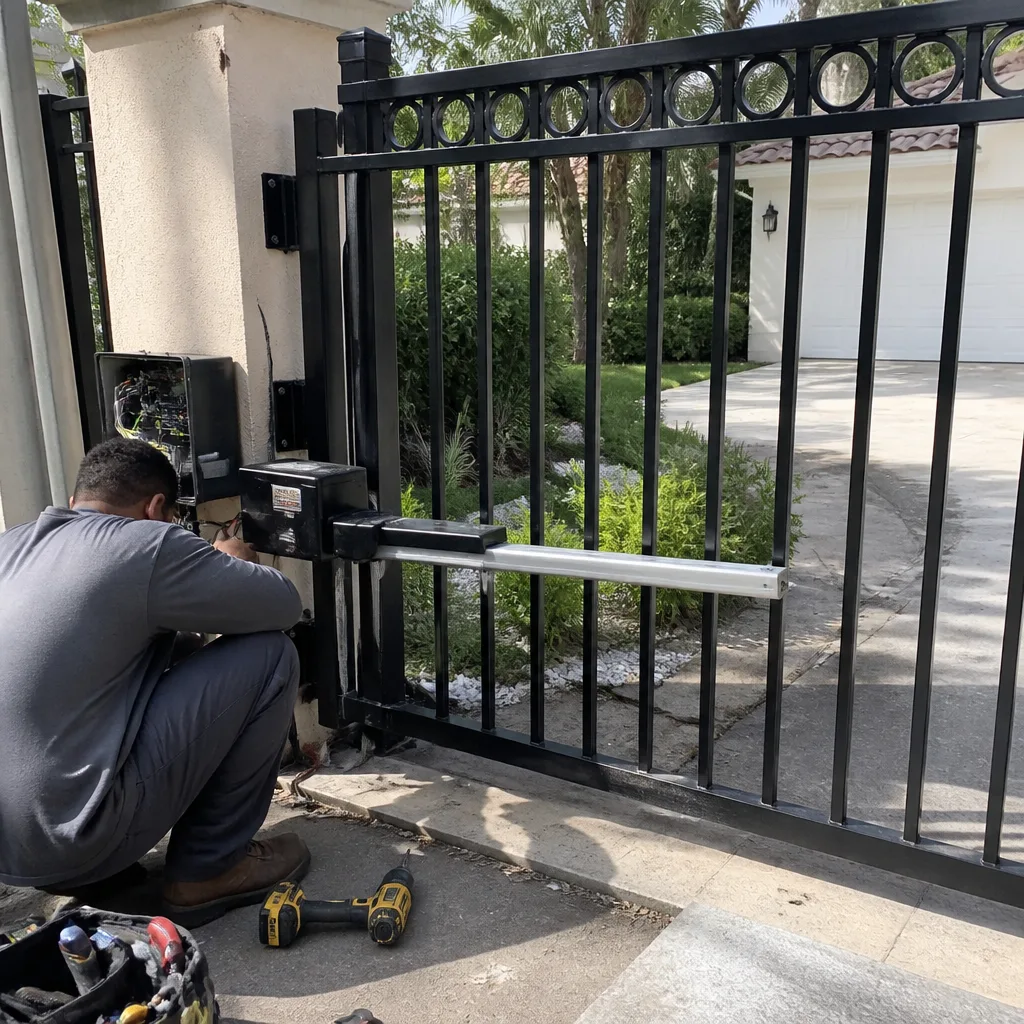 After
After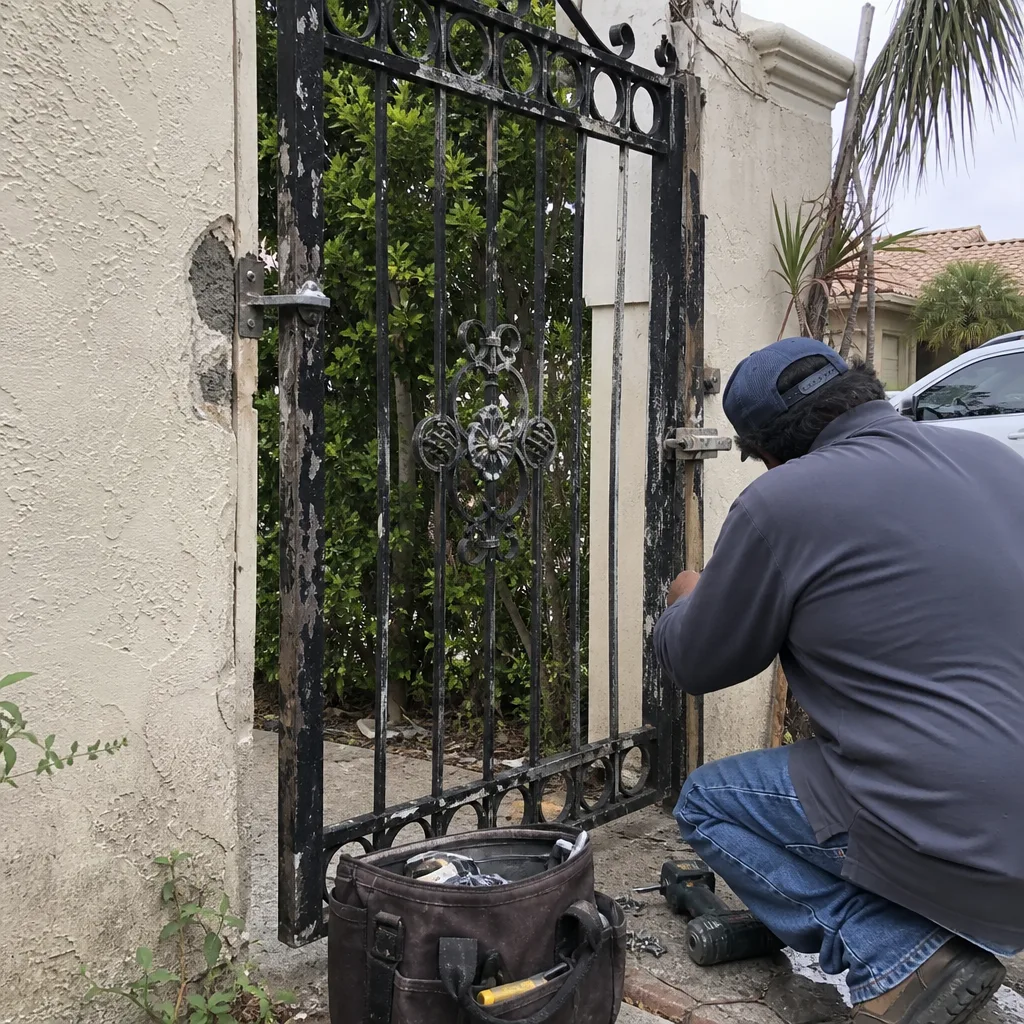 Before
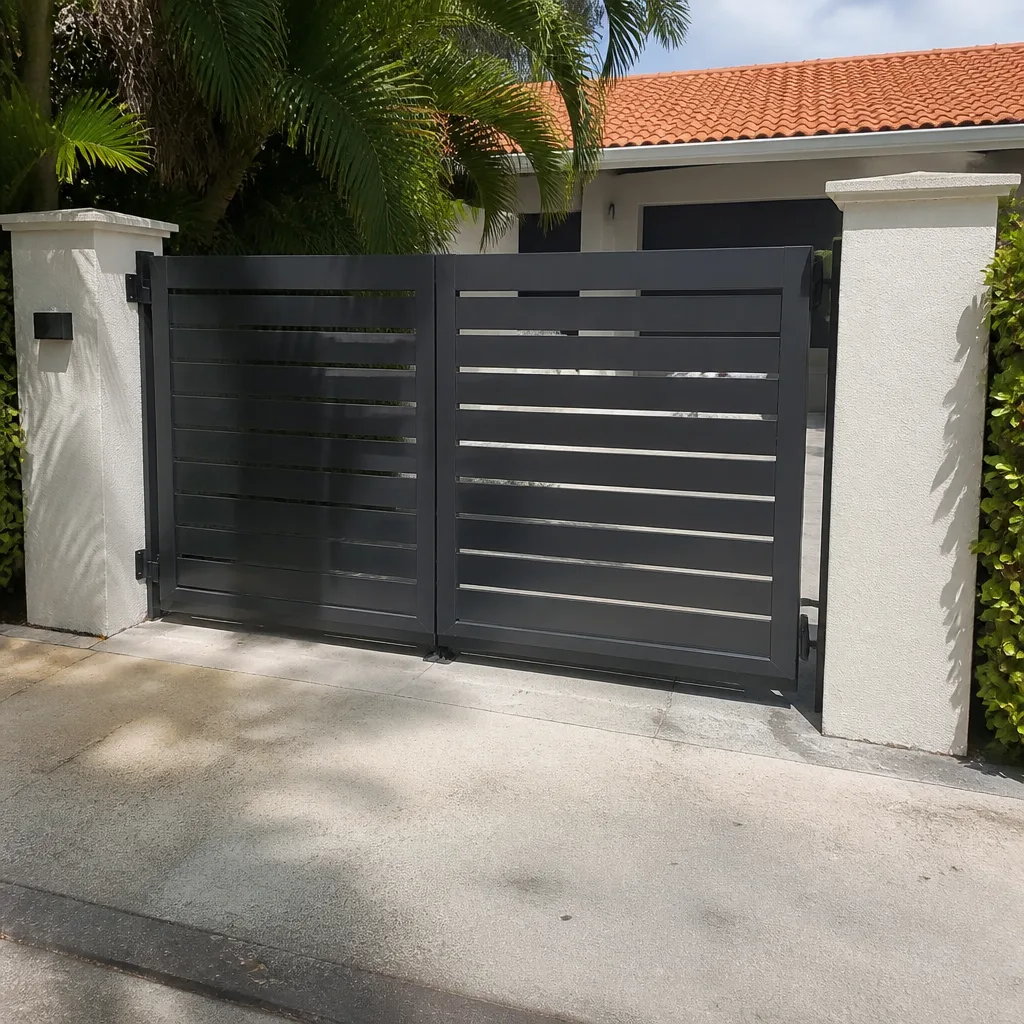 After
After Before
 After
AfterGate Repair Permits, Codes & Inspections in FL: What You Need to Know
Here’s a fact most Florida homeowners learn the hard way: the gate repair itself rarely needs a permit, but the operator that opens it often does, and the electrical work that powers it almost always does. The state’s building code draws a line between swapping a part and installing a system, and that line is exactly where unpermitted work hides. In West Palm Beach, we’ve watched this surface at closing tables and insurance desks, not because the county went looking for it, but because the buyer’s home inspector knew where to look. This guide maps the line, names the exceptions, and tells you what to ask for before the concrete dries, and for more guides & resources on gate ownership, see our blog.
Quick Answer
Most residential gate repairs in Florida do not require a permit, but three jobs typically do: installing a new gate operator (motor), replacing or resetting structural gate posts, and connecting a gate’s electrical power to a new circuit or panel. The permit trigger is not the gate itself, it’s the electrical connection and the foundation work beneath it. If your contractor cannot produce a permit number before starting a new motor installation, stop the job and call the building department in West Palm Beach to confirm.
Table of Contents
- The Florida Building Code and Gate Work: Where the Permit Line Actually Sits
- The Low-Voltage Exemption: What It Covers and Where It Stops
- West Palm Beach Jurisdiction: Palm Beach County’s Rules for Gate Permits
- How to Check Permit History on a Property Before You Buy or Hire
- What to Ask a Contractor Before Structural or Electrical Gate Work Starts
- Insurance Implications: How Unpermitted Gate Work Fails Under Standard Florida Policies
- Step by Step: The Gate Inspection Process in West Palm Beach
- Common Mistakes to Avoid
BeforeAfterThe Florida Building Code and Gate Work: Where the Permit Line Actually Sits
Florida Building Code Section 105.1 requires a permit for any work described in the code unless an exemption applies. Gates themselves are not listed as a permit-required structure, which is why replacing a bent hinge, a broken wheel, or a damaged picket is a no-permit repair. The trigger is what the gate sits on and what powers it.
The relevant distinction under the Florida Building Code is between mechanical repair and electrical installation. Replacing a gate operator with the same brand and same wiring configuration is generally treated as a like-for-like swap. Pulling a new circuit, adding a dedicated breaker, replacing a control box with a different voltage requirement, or running conduit across the yard is not. Those are electrical installations under the National Electrical Code as adopted by the Florida Building Code, and they require a permit.
Here is the clean rule we give homeowners in West Palm Beach:
- No permit: replacing hinge hardware, gate wheels, pickets, latch, keypad batteries, remotes, photo-eye cleaning and realignment, or a like-for-like motor swap using existing conduit and wire.
- Permit required: new operator installation with new wiring or a new breaker, adding a vehicle loop detector, adding a keypad or intercom that taps a new power source, welding or resetting gate posts in concrete, or any work involving a panel connection.
- Grey zone, leans permit: replacing a gate operator when the original equipment is obsolete and the new unit requires rewiring, even on the same post. If the wire gauge changes, the permit should change too.
We’ve seen permits skipped on new operators more than any other single job, especially when the gate is being installed by a landscaper, a fence company, or a handyman who subbed the motor. The gate will open. The permit still wasn’t pulled. That’s one of the Gate Repair Warning Signs: A West Palm Beach Homeowner’s Reference Guide we cover in detail.
The Low-Voltage Exemption: What It Covers and Where It Stops
This is the most misunderstood exemption in Florida gate work because it sounds like a blanket pass. It is not. The Florida Building Code exempts certain low-voltage systems from permit requirements, specifically those operating at 50 volts or less. Most residential gate operator control circuits, photo-eyes, keypads, and loop detectors run on 12 to 24 volts. So people reason: low voltage, no permit.
The exemption stops at the power supply. Almost every gate operator available for a Florida driveway runs on 120-volt line power, even a BFT or Ghost Controls unit with low-voltage controls. The transformer lives inside the operator or in a separate junction box. That transformer is fed by line voltage from the house panel. The moment you connect a 120-volt branch circuit to feed that transformer, you have left the low-voltage exemption.
Here is the practical version for West Palm Beach homeowners:
- If a licensed electrician is pulling Romex from your panel to a new post-mounted junction box, the job needs an electrical permit. Full stop.
- If a gate operator is being installed on an existing, permitted, dedicated circuit, and the installer is only terminating low-voltage control wiring, the electrical work may not need a new permit, though the operator installation itself may still require one depending on scope.
- Solar operators, which are becoming more common in West Palm Beach’s full-sun lots, usually avoid the line-voltage issue entirely, but structural anchoring to a new post or new masonry still requires review.
The demand has been clear over the last several years in Palm Beach County: the inspector wants to see that the line-voltage portion of a gate operator installation was done by an electrician and permitted. Low-voltage wiring can be done by a gate technician; the 120-volt feeder cannot, and pretending it’s all low voltage is the most common misclassification we hear.
West Palm Beach Jurisdiction: Palm Beach County’s Rules for Gate Permits
West Palm Beach operates under its own building services department within Palm Beach County’s broader code framework. For unincorporated county areas, Palm Beach County’s Planning, Zoning and Building Department is the authority. Inside city limits, West Palm Beach Development Services issues the permits and schedules the inspections. The requirement is the same in both: any work defined as construction or electrical installation needs a permit.
For gate work specifically, here is what the West Palm Beach process looks like:
- A permit application is filed by the contractor or the homeowner (owner-builder rules apply if the homeowner files).
- For a new operator or new electrical circuit, a simple site plan or plot plan showing the gate location is usually required.
- The electrical contractor’s license is noted on the permit for any line-voltage work.
- Rough inspection is scheduled after the wiring is run and before it’s covered.
- Final inspection is scheduled once the gate is hung, the operator is mounted, and the safety devices are functional.
Most gate installations in West Palm Beach fall into two permit types: an electrical permit for the feeder and controls, and a building or zoning permit if the gate is on a new concrete header or if posts are being set. The county’s inspectors are specifically sensitive to gate installations in floodplain areas where hard-wired electrical equipment must be elevated. Driveway gates on Atlantic-facing properties or in the lower districts near the Intracoastal Waterway often trigger elevation questions during plan review.
Almost no gate repair on an existing permitted system needs a new permit. Replacing a control board in a Linear or Viking operator is a repair. Adding a second keypad tapping the existing low-voltage loop is generally maintenance. The line is crossed when the work adds capacity the original permit never contemplated.
How to Check Permit History on a Property Before You Buy or Hire
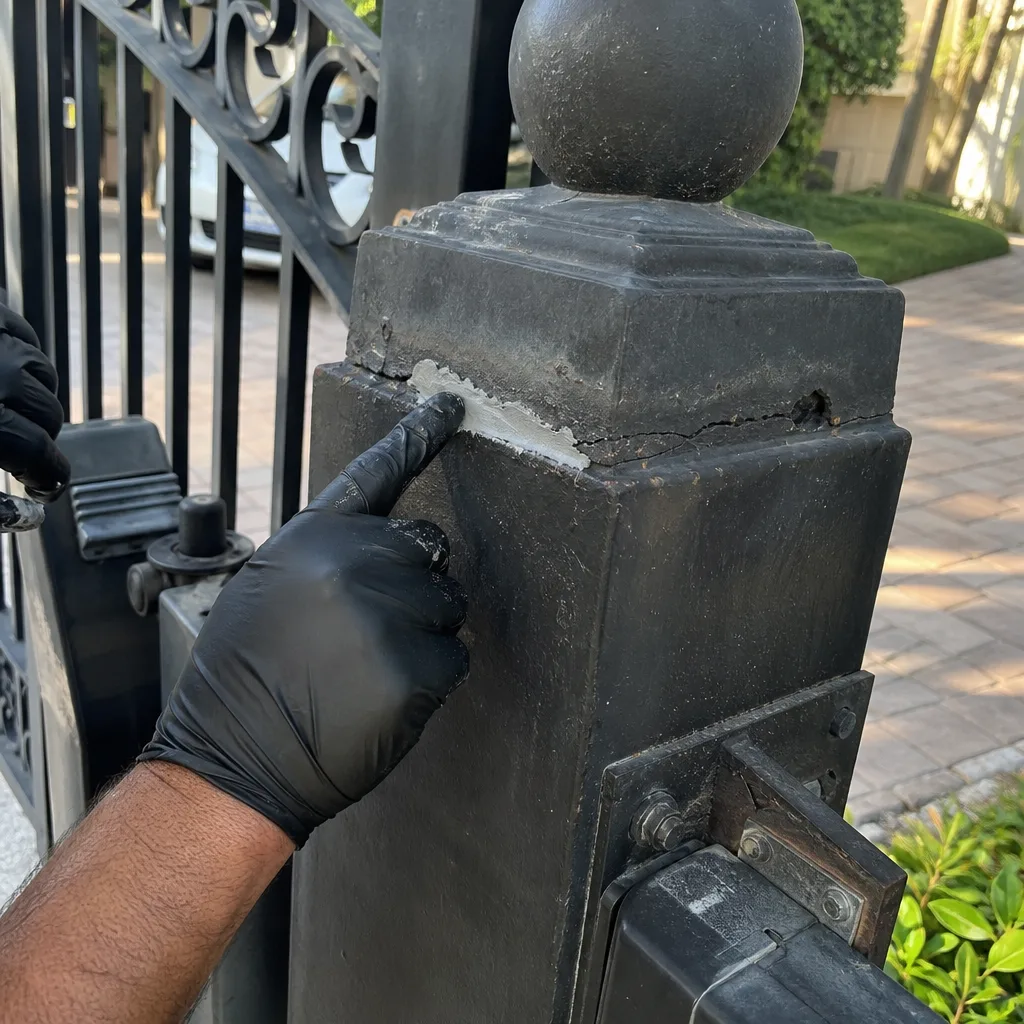
If you’re buying a home in West Palm Beach, the gate is part of the property. Ask the seller to produce permits for the gate operator installation, especially if the gate is automated and the operator looks newer than the rest of the house. This request used to be unusual; now it’s becoming standard practice among thorough buyers’ agents.
You can check permit history yourself. Both West Palm Beach Development Services and Palm Beach County offer online permit search tools. Here’s the process:
- Search the property address on the building department’s permit portal.
- Look for permits with a scope matching “gate,” “operator,” “electrical,” “driveway,” or “access control.”
- If the seller says the gate was installed in 2019 but no 2019 permit exists, ask for documentation showing otherwise.
- If the gate is automated, confirm there was at least one electrical permit covering the branch circuit and feeder.
- Print or save the search result. This documentation matters later at closing and for insurance.
We’ve been called out to West Palm Beach properties after a home inspection flagged a gate operator with no permit history. The buyers’ inspector was not looking for the gate specifically; they were doing their normal electrical panel review, saw the dedicated breaker labeled “gate,” and asked for the permit. That is where this whole issue surfaces, exactly as described at the top of this guide.
What to Ask a Contractor Before Structural or Electrical Gate Work Starts
The difference between a permitted installation and an unpermitted one is often one sentence: “Will you pull the permit, and can I see the number before you start?” A gate contractor who does this work correctly will answer yes without pausing. For How to Hire a Gate Repair Contractor in West Palm Beach: A Step-by-Step Guide, here is the list of questions to ask and the answers to expect:
- Question: “Is this a like-for-like replacement or does it require new electrical?” Expected answer: A precise description of what changes and what stays. If the answer is vague, treat it as a red flag.
- Question: “Will you provide a permit number before work begins?” Expected answer: Yes, or a clear explanation of why this specific scope does not require one, citing the code section.
- Question: “Do you have a licensed electrician for the line-voltage portion?” Expected answer: Yes, with the electrician’s license number available on request.
- Question: “What documentation will I receive at the end?” Expected answer: A copy of the permit, the electrical inspection sign-off, and ideally a written scope of work. At Vance Gate Repair West Palm Beach, every job carries a documented photo record under The Haven Standard, so you receive photos of the wiring before it’s closed up and after the final adjustment, along with the written price delivered before any work starts.
- Question: “What if the inspection fails?” Expected answer: The contractor corrects it and schedules a reinspection. A contractor who tells you they “don’t do inspections” on a job that requires them is telling you something about the price, too.
There is a specific phrase to avoid: “We’ve never had a problem.” That phrase describes luck, not compliance. The question is not whether the gate has ever been flagged. The question is whether the work is documented in the property’s official record. Unpermitted work has a long half-life. It waits until the property is sold or the claim is filed.
Insurance Implications: How Unpermitted Gate Work Fails Under Standard Florida Policies
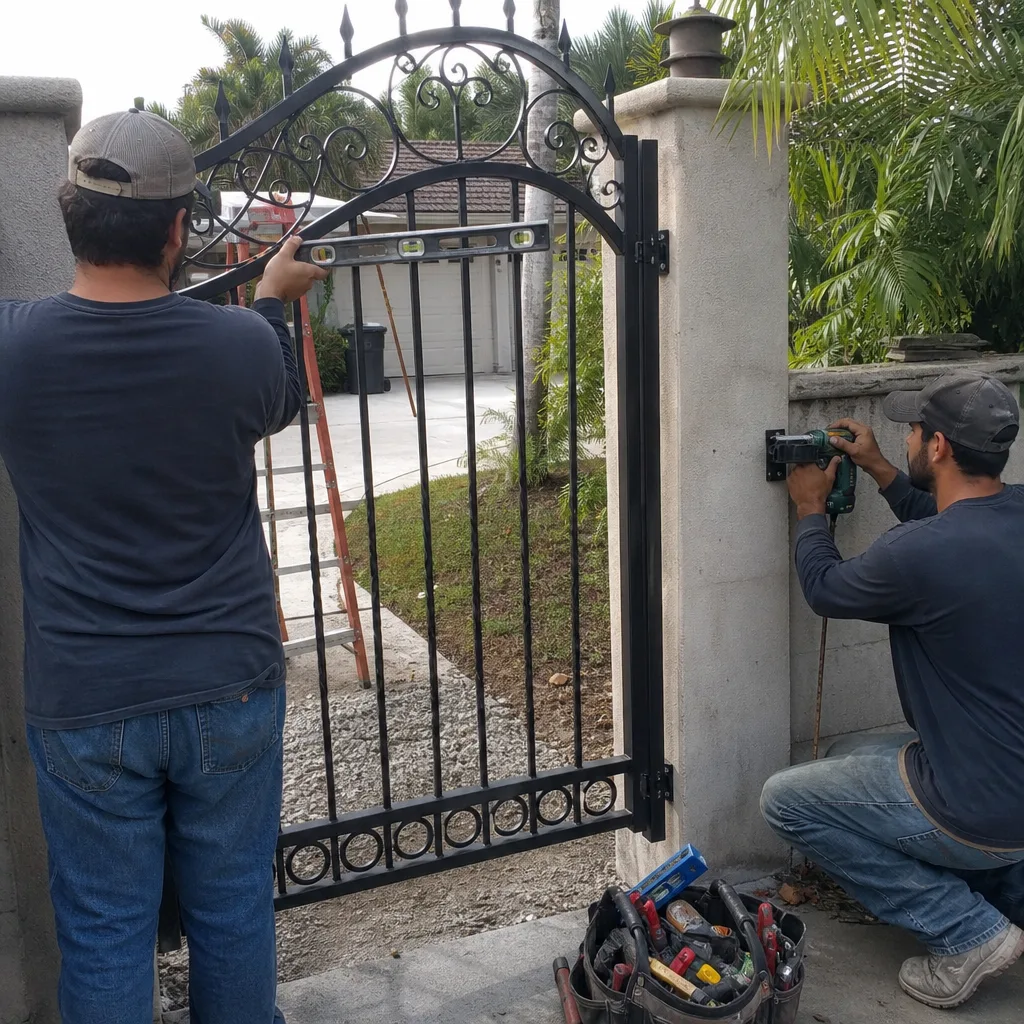
Standard Florida homeowners policies treat unpermitted work as an excluded condition when that work causes or contributes to a loss. The exclusion language varies by carrier, but the pattern is consistent: if an injury or property damage arises out of work that required a permit and no permit was obtained, the carrier can deny the claim.
Here is how that actually plays out with gates. A delivery driver walks up a driveway in West Palm Beach. The automated gate, installed without a permit three years earlier, closes on the vehicle because the photo-eye was never inspected and the loop detector was installed incorrectly. The driver files a claim against the homeowner. The insurance company investigates, finds no permit history for the operator, and denies coverage for the operator-related portion of the loss, describing the installation as a material change to the property made outside the permitted process.
The same logic applies on the property-sale side. Title companies in Palm Beach County increasingly ask sellers to sign disclosures about unpermitted work. A buyer who discovers an unpermitted gate operator after closing has a claim against the seller for undisclosed work. Those claims have delayed closings and in some cases reduced sale prices by the cost of bringing the gate work into compliance.
For gate work done in West Palm Beach, the protection is simple: the permit is the paper trail. When a technician from gate repair in West Palm Beach touches a repair, the scope is written and the work is photographed. When installation work requires a permit, the permit number is part of that same written record. The paperwork is not for show; it is the evidence you will need if a claim is ever filed.
Step by Step: The Gate Inspection Process in West Palm Beach
If your gate installation in West Palm Beach needs a permit, here is the inspection sequence and what each inspection covers. The process is not complicated once the permit exists.
- Permit issuance. The building department issues the permit after plan review. The permit card must be posted on site.
- Rough electrical inspection. The inspector verifies the new branch circuit, the junction box, the conduit, and the bonding. The gate operator itself is not usually mounted yet, but the feeder and control enclosure are in place.
- Concrete/structural inspection (if applicable). If new posts were set or the gate is on a new concrete header, the inspector checks the footing depth, the anchor bolts, and the post plumb. On some West Palm Beach lots, this inspection also checks flood elevation requirements.
- Final inspection. The operator is mounted, the gate is hung and balanced, the safety devices are operational. The inspector tests the obstruction reversal, the photo-eye, and any loop detector. They also confirm the mechanical stops and the gate’s opening arc stay within the property line.
- Inspection sign-off. The inspector records the final approval and the permit is closed. You keep the final approval record with your property documents.
The two most common final inspection failures we’ve corrected in West Palm Beach are photo-eyes mounted outside their operating range and missing vehicle loop detectors on shared driveways. Both are fixable, but both are exactly the details a knowledgeable inspector looks for. That is the entire scope of what has to be right: operator travel, safety devices, electrical grounding, and post anchoring.
Common Mistakes to Avoid
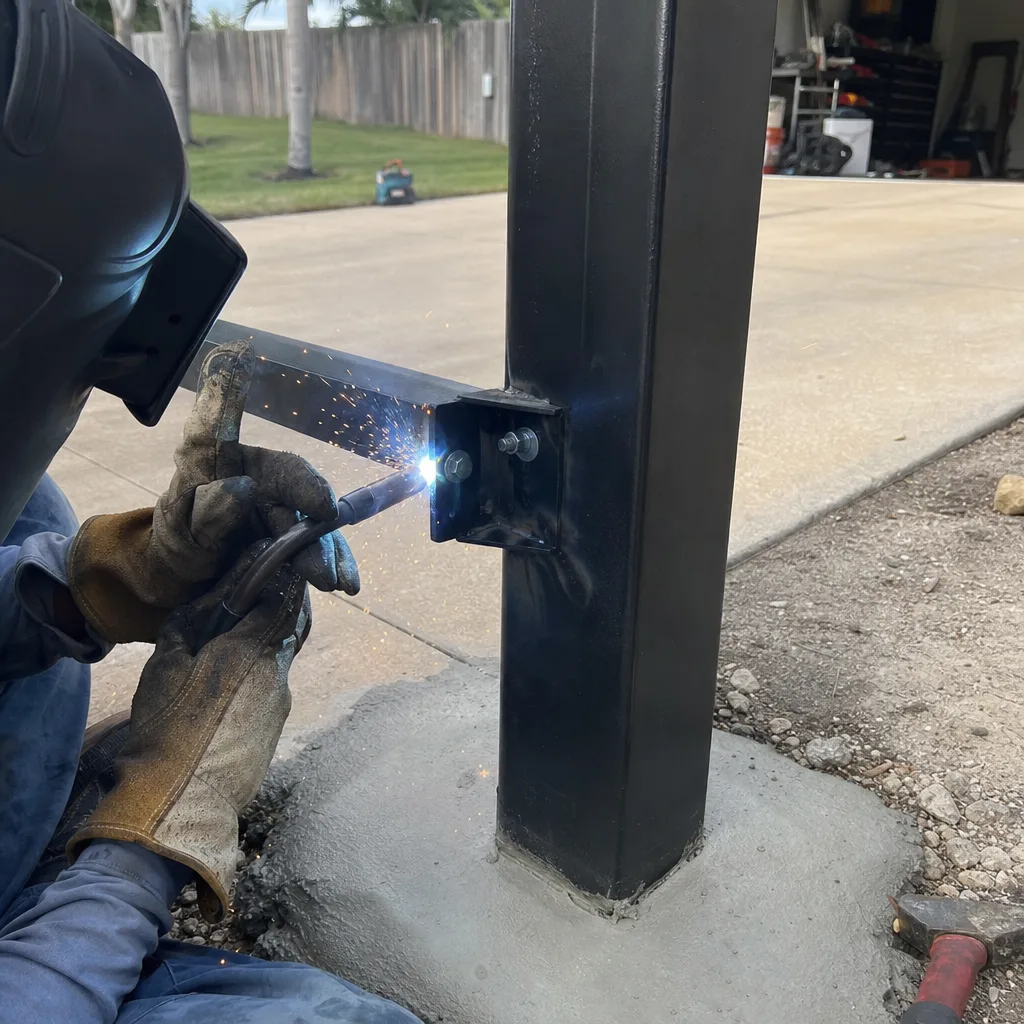
- Assuming all gate work is permit-free. Repairing a hinge is different from installing a gate motor and opener with a new power feed. The first is maintenance, the second is construction. Do not lump them together when you hire.
- Buying a property in West Palm Beach without checking gate permit history. A dedicated breaker labeled “gate” with no matching permit is a discovery and disclosure issue. Check before you sign.
- Accepting “it’s all low voltage” as a blanket explanation. The line-voltage feeder is not low voltage. A BFT or Viking operator’s control wiring may be 24 volts, but the transformer that powers it is not exempt. Ask where the 120 volts stops.
- Letting a fence contractor or landscaper install a gate operator. Fence contractors build fences. Gate operators involve electrical work, safety devices, and often a permit. West Palm Beach homeowners have hired the fence company because they were already building the fence, then discovered the operator portion was unpermitted.
- Paying for the work before the inspection signs off. The final payment should follow the final inspection, not the day the gate starts opening. Contractors who ask for full payment before the permit is closed are asking you to absorb their inspection risk.
- Using a verbal estimate for structural gate work. If the work involves concrete, a panel connection, or a new operator, the scope and the permit responsibility should be written. Vance Gate Repair West Palm Beach works under The Haven Standard, Clause 1: a written price delivered before any work starts. That standard is the baseline, not a premium feature.
When to Call a Professional
Call a professional when the gate work involves a new operator with new electrical, when posts need to be reset in concrete, when the gate hits a vehicle or a person and you need the safety devices corrected, or when you have discovered unpermitted gate work and need it brought into compliance before a sale or an insurance renewal. These are not weekend projects. A mis-wired 120-volt feeder on a gate post is a genuine electrical hazard, and a gate operator without proper safety devices is a liability every time it cycles. If the permit status of your gate work is unclear, or you want a gate installation in West Palm Beach done with the paperwork correct from day one, Vance Gate Repair West Palm Beach offers free estimates in West Palm Beach. Call (561) 725-8048 and ask for a written scope and a permit answer before anything is ordered.
Frequently Asked Questions
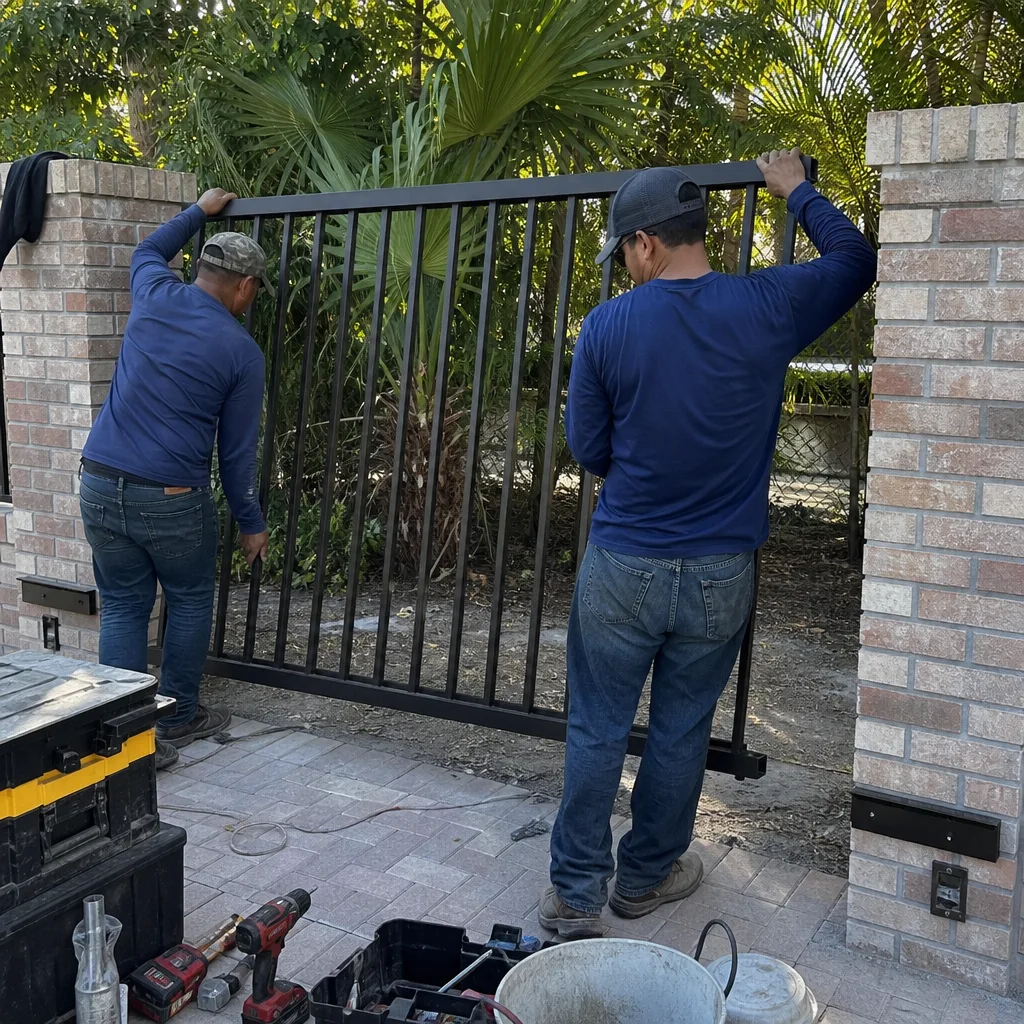
No, most gate repairs do not require a permit in Florida, including hinge replacement, wheel replacement, picket straightening, latch repair, and like-for-like operator swaps that reuse the existing wiring and breaker. You need a permit when the repair becomes installation, specifically when new electrical wiring, a new dedicated breaker, or structural post work is involved. If the existing permit history is unknown, Vance Gate Repair services in West Palm Beach can review the gate and tell you where your work falls. Call (561) 725-8048 for a written answer before you authorize anything.
Permit fees for a typical residential gate operator installation in West Palm Beach run between roughly $120 and $400 depending on whether the job is filed as an electrical permit, a building permit, or both. The contractor’s time to prepare the application and meet the inspector is separate from the fee itself. The better question is what the unpermitted version costs later: rework, disclosure penalties, and denied claims. Get a written estimate that includes the permit responsibility before the job starts by calling (561) 725-8048.
Vehicle loop detectors are generally required as an entrapment protection or free-exit device on automated vehicular gates that serve a single-family residence when the gate’s design relies on a loop for safe operation, and they are specifically required on many larger or shared driveway gates in West Palm Beach. The requirement depends on the gate’s operating method and the UL 325 compliance of the operator. If your gate closes on a vehicle that is not a simple ground-level obstruction, the loop detector is likely part of the code-compliant design and often part of the permit scope.
The unpermitted work is your responsibility once you own the property, even if a previous owner installed it. You can file for an after-the-fact permit, have the work inspected and corrected, or in some cases replace the unpermitted equipment with a permitted installation. The first step is documentation: pull the property’s permit history and then have the gate evaluated by a technician who understands West Palm Beach’s electrical inspection requirements. Vance Gate Repair West Palm Beach has corrected unpermitted installations and will name what needs to change before any work starts.
Florida law allows homeowners to act as owner-builders on their own residence, which means you can pull a permit and install your own gate operator if you do the work yourself and meet the code requirements. You are still responsible for the same inspections, the same electrical code, and the same safety devices as a licensed contractor. Most homeowners underestimate the line-voltage portion. If any part of the job is outside your skill, hire a licensed professional and require the permit.
The permit record is attached to the property, not the owner, so a properly permitted gate installation transfers with the house and appears in the property’s official permit history. That is why buyers and their inspectors look for it. If the gate was never permitted, there is no record to transfer, and the disclosure issue belongs to the seller. The best time to resolve it is before the property is listed.
The Bottom Line
Gate permits in Florida are a narrow topic and a real one. The repair you need probably needs no permit. The new operator, the panel connection, and the concreted post probably do. The distinction is not about the gate, it’s about the electricity and the structure under it. In West Palm Beach, where property transactions and insurance claims move quickly, the permit is the record that protects the homeowner when the inspection comes, when the sale closes, and when the claim is filed. Ask for the permit number before the work starts, keep the sign-off when it ends, and if the contractor can’t produce one for a job that needs one, find a contractor who can.
For gate work in West Palm Beach with a written price, a documented photo record, and a clear permit answer before anything is ordered, call Vance Gate Repair West Palm Beach at (561) 725-8048. We’ll tell you exactly what your job requires, in writing, before you spend a dollar.
Written by Adrian Vance, Owner at Vance Gate Repair West Palm Beach, serving West Palm Beach since 2014.